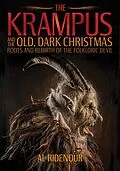
The dark folklore behind Krampus, St. Nicholas, and the winter traditions that survived beneath Christmas. The Krampus and the Old, Dark Christmas by Al Ridenour explores the shadow side of the winter holidays, tracing the folklore, rituals, and seasonal customs that predate and coexist with modern Christmas. Moving from Alpine Krampus runs and masked parades to wassailing, mumming, and other pre-Christian winter traditions, Ridenour uncovers a seasonal world filled with devils, spirits, and symbolic reversals of social order. Blending cultural history, folklore research, and contemporary fieldwork, the book examines how figures like Krampus, Perchta, and other winter spirits evolved over centuries-and why they continue to resonate today. Ridenour documents the revival of these traditions across Europe and North America, placing them within a broader history of winter festivals, public spectacle, and communal ritual. Richly illustrated and grounded in both scholarship and firsthand observation, the book offers a detailed look at how the "old dark Christmas" persists beneath modern holiday culture. An essential seasonal title for readers of folklore, European history, Christmas traditions, and contemporary festival culture. Ridenour's A Season of Madness: Fools, Monsters, and Marvels, of the Old-World Carnival (2025) explores the winter festivals and celebrations that begin after Christmas. "Delightfully informative and beautifully illustrated...a must for anyone curious about the darker side of the holidays." - Publishers Weekly "A lively tour through the strange and ancient roots of Christmas." - Los Angeles Review of Books "Engaging and meticulously researched." - Atlas Obscura "Perfect for readers who like their holiday traditions with a little mischief." - Boing Boing
Autorentext
His Krampus research has taken him to the Austrian Alps and Munich, and brought him in contact with cultural anthropologists working in Salzburg and Vienna as well as dozens of members of contemporary European Krampus groups. In 2013, Ridenour co-founded Krampus Los Angeles, an organization that's made the city ground zero for American Krampusmania.
Ridenour has translated and produced the only English-language version of 19th-century Krampus play, written articles, and lectured on the topic at the international Goethe-Institut and elsewhere, and exhibited his Krampus suits at the University of Southern California's Doheny Museum
Klappentext
Inhalt
Introduction: The Dead of Winter
Christmas wasn't always a time of peace and domestic coziness. In German-speaking lands, the Twelve Nights of Christmas were closer to Halloween.
Chapter 2: Gruß vom Krampus!
How America fell in love with the Krampus. Pop-culture Krampus. 19th-century Krampus postcards, featuring the iconic slogan, "Gruß vom Krampus," ("Greetings from the Krampus.") Similar figures in North Germany, Holland, France, etc.
Chapter 2: The Devil at the Door
Firsthand account of the Krampus in Austria. How the Krampus groups organize and conduct traditional house-visits with St. Nicholas. Details and history regarding masks and costumes.
Chapter 3: The Beast Pursues his Game
The Krampuslauf ("Krampus run") and modernizing influences. Issues of traditionalism, violence, alcohol, and gender involved in runs.
Chapter 4: The Church Breeds a Monster
Evolution of the Krampus from devils in medieval mystery plays. The surprisingly unruly Alpine Nikolausspiele ("Nicholas plays") and parades of 17th-18th century contribute to Krampus practice.
Chapter 5: Frau Perchta, Witches, Ghosts
The witch-goddess Frau Perchta or Frau Holda as folkloric leader of seasonal horde of lost souls, ghosts, or demons, sometimes called Perchten. Frau Perchta and her Perchten as forerunners of Krampus custom.
Chapter 6: The Haunted Season
The Krampus' native habitat is the season between St. Martin's Day and Epiphany haunted by the Nußmärtel ("Nut Martin") a sooty-faced, bearded character with a whip, the Bärbele, moss- faced crone-like characters carrying switches on St. Barbara's Day, a "Bloody" St. Thomas and sickle wielding St. Lucy.
Chapter 7: The Perchten, Ancient Spirits of the Alps?
Perchten are largely indistinguishable from the Krampus but appear during the Twelve Nights, particularly Epiphany Eve. Perchten runs described, including oldest in Bad Gastein dating to 1730. A few theories as to why Perchten do what they do.
Chapter 8: American Krampus: Return of the Old, Dark Christmas
Immigrant Krampus traditions in American backwoods. Krampus' in German Brazil. American's old, dangerous Christmas