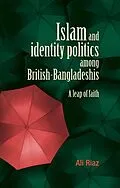
This book probes the causes of and conditions for the preference of the members of the British-Bangladeshi community for a religion-based identity vis-à-vis ethnicity-based identity, and the influence of Islamists in shaping the discourse. The first book-length study to examine identity politics among the Bangladeshi diaspora delves into the micro-level dynamics, the internal and external factors and the role of the state and locates these within the broad framework of Muslim identity and Islamism, citizenship and the future of multiculturalism in Europe. Empirically grounded but enriched with in-depth analysis, and written in an accessible language this study is an invaluable reference for academics, policy makers and community activists. Students and researchers of British politics, ethnic/migration/diaspora studies, cultural studies, and political Islam will find the book extremely useful.
Autorentext
Ali Riaz is Professor and Chair of the Department of Politics and Government at Illinois State University, USA
Klappentext
The tendency among ethnic minority Muslim immigrant communities in Europe towards identification with Islam as a marker of identity has been discussed in an array of studies, but seldom have they explained sufficiently how the change took place. Islam and Identity politics among British-Bangladeshis: A leap of faith probes the causes of and conditions for the preference of members of the British-Bangladeshi community for a religion-based identity vis-à-vis ethnicity-based identity, and the influence of Islamists in shaping the discourse. This study maps the changes in identity politics of one of Britain's youngest and fastest growing communities. The first book-length study to examine identity politics among the Bangladeshi diaspora in the era of globalisation, it identifies the actors and events, and explores the challenges, opportunities and dilemmas for members of the community and the British state. It also examines whether this salience of Muslim identity is a precursor to a new variant of diasporic Islam in Europe. The book delves into the micro-level dynamics, identifying the internal and external influences, and locates these within the broad framework of Muslim identity and Islamism, citizenship and the future of multiculturalism in Europe. Empirically grounded but enriched with in-depth analyses, and written in an accessible language, this study is an invaluable reference for academics, especially students and researchers of British politics, ethnic/migration/diaspora studies, cultural studies, and political Islam. Policy makers and community activists will find the book beneficial in engaging in a meaningful, mature, and nuanced debate on identity politics among ethnic minorities in Britain.
Inhalt
Introduction1. The Bangladeshi diaspora in the United Kingdom2. A tale of two long summers3. Identity, Islamism and politics: the internal factors4. Identity, Islamism and politics: the state as an actor5. Beyond the presentNotesBibliographyIndex