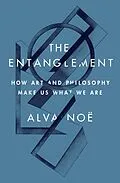
Why human being is an aesthetic, not natural, phenomenon-and why we need art and philosophy to understand ourselves
In The Entanglement, philosopher Alva Noë explores the inseparability of life, art, and philosophy, arguing that we have greatly underestimated what this entangled reality means for understanding human nature.
Life supplies art with its raw materials, but art, by giving us resources to live differently, remakes life, Noë argues. Our lives are permeated with the aesthetic. Indeed, human nature is an aesthetic phenomenon and art-our most direct and authentic way of engaging the aesthetic-is the truest way of understanding ourselves. All this suggests that human nature is not a natural phenomenon. Neither AI, cognitive science, nor biology can tell a complete story of us, and we can no more pin ourselves down than we can fix or settle on the meaning of an artwork. Even more, art and philosophy are the means to set ourselves free, at least to some degree, from convention, habit, technology, culture, and even biology. In making these provocative claims, Noë explores examples of entanglement-in artworks and seeing, writing and speech, and choreography and dancing-and examines a range of scientific efforts to explain the human.
Challenging the notions that art is a mere cultural curiosity and that philosophy has been outmoded by science, The Entanglement offers a new way of thinking about human nature, the limits of natural science for understanding the human, and the essential role of art and philosophy for trying to know ourselves.
Autorentext
Alva Noë is professor of philosophy at the University of California, Berkeley, where he is a member of the Center for New Media, the Institute for Cognitive and Brain Sciences, and the Program in Critical Theory. His many books include Strange Tools: Art and Human Nature and Learning to Look: Dispatches from the Art World.