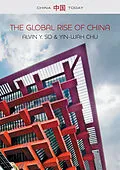
This book sets out to unravel and explain the puzzle of the global rise of China: how, in just forty years, China has been quickly transformed from a poor, backward third-world country to one of the world's core economic powerhouses. Exactly how did this Chinese developmental miracle happen?
Focusing on the key historical turning point in China's post-socialist development, the book examines the complex processes through which China interacted with the global neoliberal project of the late twentieth century. Alvin Y. So and Yin-Wah Chu reveal the centrality of the communist party-state in propelling China onto the world scene, and how it has successfully responded to the developmental challenges of technological upgrading, environmental degradation, inter-state rivalry, and maintaining its power.
This book provides a comprehensive and insightful study of the rise of China not solely from an economic, social, and political perspective, but also from a global and historical perspective. It will be an invaluable guide for students and non-specialists interested in post-socialist development and the global rise of China in the twenty-first century.
ALVIN Y. SO is Chair Professor of Social Science at Hong Kong University of Science and Technology.
YIN-WAH CHU is Associate Professor of Sociology at Hong Kong Baptist University.
Autorentext
ALVIN Y. SO is Chair Professor of Social Science at Hong Kong University of Science and Technology.
YIN-WAH CHU is Associate Professor of Sociology at Hong Kong Baptist University.
Leseprobe
2
Socialist Foundation and the Critical Transition to State Neoliberalism
After the Communist Revolution in 1949, the Chinese Communist Party (CCP) under the leadership of Mao Zedong took control over China when it defeated the Nationalist Party (Guomindang or Kuomintang) in the civil war. 1 For almost thirty years, the communist party-state pursued revolutionary socialist programs in the form we have called "state socialism" as a strategy to achieve the twin goals of economic development and social equality. Then, in 1978, the party-state shifted gears, suddenly dropped its socialist aspirations, and adopted the "reform and opening up" policy, which unleashed a whole series of changes that launched China gradually but unmistakably on the path of "state neoliberalism." In this chapter, we attempt to answer three research questions:
What were the distinctive features of China's state socialism between 1949 and 1978?
Had the Maoist socialist experiment been a total disaster or, alternatively, had it laid a solid foundation for the remarkable economic growth in post-socialist China since 1978?
What factors had prompted China to embark on the critical transition to state neoliberalism in 1978? Characteristics of State Socialism in China
Suppose you could travel through time to Maoist China in the mid-1970s, and you told the Chinese that their country would become an economic powerhouse of the capitalist world economy in the next thirty years. No Chinese would take your words seriously because they knew that China had experienced very serious developmental problems during the socialist period (since 1949), and this painful socialist legacy should prevent the country from making any progress in economic development.
First of all, when the Chinese Communist Party took power in 1949, China was a much devastated country owing to rounds of foreign encroachments that often escalated into wars, infighting among warlords and violent civil wars between the communists and the nationalists, and serious structural deficiency and dislocations such as the inadequacy of arable land, a shortage of investment capital, and technological stagnation. Raging hyperinflation in the last years of the Republic government's rule in the late 1940s also drove the Chinese economy into disarray.
In 1952, a year when China was deemed to have recovered from the worst of war devastation, its gross domestic product (GDP) amounted to 67,900 million yuan (Chinability 2014). With a population of about 588 million, 2 per capita income amounted to 116 yuan, making it one of the poorest countries in the world. As with most other poor developing economies, China was dominated by agriculture, with the primary sector contributing 50.5 percent, the secondary sector 20.9 percent, and the tertiary sector 28.6 percent to its GDP (Hitotsubashi University Team n.d.). In 1950, life expectancy at birth was around 36 and no more than 25 percent of the population attained primary education (Selden 1993).
Furthermore, China faced the problem of forced withdrawal from the world economy. Before the Chinese communist state could barely consolidate its power in the early 1950s, the US quickly mobilized warships to patrol the Taiwan Strait and supported the defeated Nationalist Party in Taiwan, sent soldiers to fight Chinese troops in Korea, imposed an economic embargo on mainland Chinese products, and waged ideological attacks on Chinese "communist totalitarianism" in the mass media. Until 1971, the country was also barred from assuming its place in the United Nations.
Indeed, in order to contain the spread of communism from China (and the Soviet Union), the United States was said to have gone so far as to pardon Japan immediately after the Pacific War, and helped to construct a "Greater East Asian Co-prosperity Circle," which allowed Japan
Inhalt
Map
Chronology
Preface
1 Introduction
SECTION ONE: The Chinese Development Miracle
2 Socialist Foundation and the Critical Transition to State Neoliberalism
3 State Neoliberalism: The Political Economy of the Rise of China
4 Global Economic Crisis and the Deepening of State Neoliberalism
SECTION TWO: Challenges of China's Global Rise
5 The Challenge of Catching Up: Technological Upgrading and Moving up the Value Chain
6 The Challenges of Staying in Power
7 The Challenges of Sustainability: Environmental Degradation and Resource Depletion
8 The Challenges of Global Rivalry: Resource Competition and Territorial Disputes
9 Conclusion
Notes
References
Focusing on the key historical turning point in China's post-socialist development, the book examines the complex processes through which China interacted with the global neoliberal project of the late twentieth century. Alvin Y. So and Yin-Wah Chu reveal the centrality of the communist party-state in propelling China onto the world scene, and how it has successfully responded to the developmental challenges of technological upgrading, environmental degradation, inter-state rivalry, and maintaining its power.
This book provides a comprehensive and insightful study of the rise of China not solely from an economic, social, and political perspective, but also from a global and historical perspective. It will be an invaluable guide for students and non-specialists interested in post-socialist development and the global rise of China in the twenty-first century.
ALVIN Y. SO is Chair Professor of Social Science at Hong Kong University of Science and Technology.
YIN-WAH CHU is Associate Professor of Sociology at Hong Kong Baptist University.
Autorentext
ALVIN Y. SO is Chair Professor of Social Science at Hong Kong University of Science and Technology.
YIN-WAH CHU is Associate Professor of Sociology at Hong Kong Baptist University.
Leseprobe
2
Socialist Foundation and the Critical Transition to State Neoliberalism
After the Communist Revolution in 1949, the Chinese Communist Party (CCP) under the leadership of Mao Zedong took control over China when it defeated the Nationalist Party (Guomindang or Kuomintang) in the civil war. 1 For almost thirty years, the communist party-state pursued revolutionary socialist programs in the form we have called "state socialism" as a strategy to achieve the twin goals of economic development and social equality. Then, in 1978, the party-state shifted gears, suddenly dropped its socialist aspirations, and adopted the "reform and opening up" policy, which unleashed a whole series of changes that launched China gradually but unmistakably on the path of "state neoliberalism." In this chapter, we attempt to answer three research questions:
What were the distinctive features of China's state socialism between 1949 and 1978?
Had the Maoist socialist experiment been a total disaster or, alternatively, had it laid a solid foundation for the remarkable economic growth in post-socialist China since 1978?
What factors had prompted China to embark on the critical transition to state neoliberalism in 1978? Characteristics of State Socialism in China
Suppose you could travel through time to Maoist China in the mid-1970s, and you told the Chinese that their country would become an economic powerhouse of the capitalist world economy in the next thirty years. No Chinese would take your words seriously because they knew that China had experienced very serious developmental problems during the socialist period (since 1949), and this painful socialist legacy should prevent the country from making any progress in economic development.
First of all, when the Chinese Communist Party took power in 1949, China was a much devastated country owing to rounds of foreign encroachments that often escalated into wars, infighting among warlords and violent civil wars between the communists and the nationalists, and serious structural deficiency and dislocations such as the inadequacy of arable land, a shortage of investment capital, and technological stagnation. Raging hyperinflation in the last years of the Republic government's rule in the late 1940s also drove the Chinese economy into disarray.
In 1952, a year when China was deemed to have recovered from the worst of war devastation, its gross domestic product (GDP) amounted to 67,900 million yuan (Chinability 2014). With a population of about 588 million, 2 per capita income amounted to 116 yuan, making it one of the poorest countries in the world. As with most other poor developing economies, China was dominated by agriculture, with the primary sector contributing 50.5 percent, the secondary sector 20.9 percent, and the tertiary sector 28.6 percent to its GDP (Hitotsubashi University Team n.d.). In 1950, life expectancy at birth was around 36 and no more than 25 percent of the population attained primary education (Selden 1993).
Furthermore, China faced the problem of forced withdrawal from the world economy. Before the Chinese communist state could barely consolidate its power in the early 1950s, the US quickly mobilized warships to patrol the Taiwan Strait and supported the defeated Nationalist Party in Taiwan, sent soldiers to fight Chinese troops in Korea, imposed an economic embargo on mainland Chinese products, and waged ideological attacks on Chinese "communist totalitarianism" in the mass media. Until 1971, the country was also barred from assuming its place in the United Nations.
Indeed, in order to contain the spread of communism from China (and the Soviet Union), the United States was said to have gone so far as to pardon Japan immediately after the Pacific War, and helped to construct a "Greater East Asian Co-prosperity Circle," which allowed Japan
Inhalt
Map
Chronology
Preface
1 Introduction
SECTION ONE: The Chinese Development Miracle
2 Socialist Foundation and the Critical Transition to State Neoliberalism
3 State Neoliberalism: The Political Economy of the Rise of China
4 Global Economic Crisis and the Deepening of State Neoliberalism
SECTION TWO: Challenges of China's Global Rise
5 The Challenge of Catching Up: Technological Upgrading and Moving up the Value Chain
6 The Challenges of Staying in Power
7 The Challenges of Sustainability: Environmental Degradation and Resource Depletion
8 The Challenges of Global Rivalry: Resource Competition and Territorial Disputes
9 Conclusion
Notes
References
Titel
Global Rise of China
Untertitel
Unterstützte Lesegerätegruppen: PC/MAC/eReader/Tablet
Autor
EAN
9781509502523
Format
E-Book (epub)
Hersteller
Herausgeber
Veröffentlichung
08.12.2015
Digitaler Kopierschutz
Adobe-DRM
Dateigrösse
0.95 MB
Anzahl Seiten
242
Unerwartete Verzögerung
Ups, ein Fehler ist aufgetreten. Bitte versuchen Sie es später noch einmal.