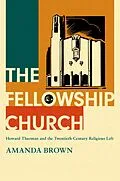
The Fellowship Church explores the evolution of the American religious left through a case study of the African American intellectual and theologian Howard Thurman, and the physical embodiment of his thought: The Church for the Fellowship of All Peoples. The Fellowship Church, which Thurman co-founded in San Francisco in 1944, was the nation's first interracial, intercultural, and interfaith church. Amidst the growing nationalism of the World War II era and the heightened suspicion of racial and cultural "others," the Fellowship Church successfully established a pluralistic community based on the idea that "if people can come together in worship, over time would emerge a unity that would be stronger than socially imposed barriers." Rooted in the belief that social change was inextricably connected to internal, psychological transformation and the personal realization of the human community, it was an early expression of Christian nonviolent activism within the long Civil Rights Movement. The Fellowship Church was a product of evolving twentieth-century ideas and a reflection of the shifting mid-century American public consciousness. This book examines a broad scope of modern themes including the philosophy of pragmatism; mysticism and Christian liberalism; racism and imperialism; cosmopolitanism and pluralism; war and pacifism; and nonviolence. Not only does it expand on our understanding of twentieth-century American intellectual history and the origins of the Civil Rights Movement, it offers an exciting look into ways people have initiated grassroots activism during times when government has failed to protect its citizens' civil liberties, safety, and overall wellbeing through judicial safeguards.
Autorentext
Amanda Brown is an American intellectual and cultural historian and an adjunct professor of History at Lehigh University. She earned a Ph.D. in History as well as an M.A. in American Studies from Lehigh and she also holds B.A.'s in American Studies and Advertising from Penn State University.
Inhalt
LIST OF FIGURES ABBREVIATIONS HOWARD THURMAN TIMELINE INTRODUCTION I. THE AMERICAN THINKER W.E.B. Du Bois, African American Activism, and the "Talented Tenth" Rufus Jones and Affirmation Mysticism A Modern, Pragmatic, African American Mystic II. COLORING THE CHRISTIAN LEFT Spiritual and Colored Cosmopolitanism YMCA FOR Gandhi India Christian Liberalism for the Minority III. WARTIME SAN FRANCISCO'S PRAGMATIC RELIGIOUS INSTITTUION Thurman and the War The Draw of San Francisco New Beginnings Pluralism within the Fellowship Church Mysticism within the Fellowship Church Mysticism as Spiritual Practice Intellectual Supplements Religious Experience Through Art Practical Implications IV: ANOTHER SIDE OF THE CHRISTIAN LEFT The Fellowship Church's Cosmopolitanism and Christian Liberalism Cosmopolitan Community Christian Liberalism Jesus and the Disinherited Institutional Christianity and the Historical Jesus Psychology and Mysticism Reception CONCLUSION BIBLIOGRAPHY