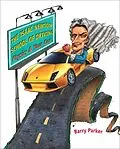
"Wonderful . . . a great resource for automobile fans who want to understand science, and vice versa." -Alan C. Tribble, author of A Tribble's Guide to Space For some, driving is an art; for others, it's a science. At the Isaac Newton School of Driving, though, every car is a laboratory on wheels and every drive an exciting journey into the world of physics. In this book, physics professor Barry Parker-whose father was a car mechanic and garage owner-shows how almost every aspect of driving involves physics. A car's performance and handling relies on concepts such as force, momentum, and energy. Its ignition system depends on the principles of electricity and magnetism. Braking relies on friction-and if the brakes fail, the resulting damage, too, can be predicted using physics. Parker's first lesson describes the basics: speed and acceleration; why you get thrown forward while braking or outward while turning; and why car advertisements boast about horsepower and torque. He also discusses:
- the thermodynamics of engines, and how they can be more fuel efficient
- what friction and traction are and how they keep a car's tires on the road, whether it's dry, wet, or icy
- how simple laws of physics enable scientists to design aerodynamic cars and high-tech steering systems
- the high-performance physics of auto racing
- how traffic accidents are reconstructed by police
- how chaos theory helps explain why traffic jams happen
- what cars of the future might look like, and more
Autorentext