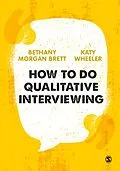
Whether you are new to interviewing and working toward an undergraduate dissertation or refining your fieldwork as you complete a research project, this book contains everything you need to know for successful qualitative interview data collection.
Organised around practical hints, reflexive tasks, bite-sized pieces of information and original case study material, the authors' candid accounts of their research experiences help you approach qualitative interviewing with transparency, consistency and confidence.
It walks you through how to:
- Decide if interviews are the right tool for your project
- Turn your research ideas into well-phrased interview questions
- Navigate ethical review and informed consent
- Recruit participants
- Choose an effective interview style
- Adapt your methods for different populations
- Transcribe and analyse your data.
Autorentext
Dr Bethany Morgan Brett is a lecturer in Psychosocial and Psychoanalytic Studies at the University of Essex, and a Child and Adolescent Psychotherapist. She holds a bachelor's degree, two master's degrees, and a PhD in Sociology from the University of Essex. She has 15 years lecturing experience in social psychology, psychoanalysis, and psychosocial studies. Her research has primarily focused on ageing and the life course development. Her key areas of specialism include coping with loss, grief, depression and anxiety, trauma, care, and end of life issues. She also worked for nine years in the UK Data Archive and specialises in research data management, digitising and archiving qualitative research collections, and qualitative research ethics.
She has published a number of journal articles and is currently authoring a monograph for Policy Press on Adult Children and Ageing Parents. She has also recently co-authored textbook with Dr Katy Wheeler How to Do Qualitative Interviewing which is due to be published by SAGE later in 2021.
Inhalt
Chapter 1: Introduction
Chapter 2: Design Your Style
Chapter 3: Plan your Interview Guide
Chapter 4: Find Participants
Chapter 5: Think Ethically
Chapter 6: Get Ready, Go
Chapter 7: Create your Data
Chapter 8: Manage the Encounter
Chapter 9: Adapt your Style
Chapter 10: Transcribe your Data
Chapter 11: Prepare your Next Steps