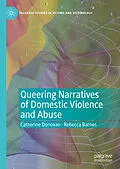
This book is the first to focus on violent and/or 'abusive' behaviours in lesbian, gay, bisexual and/or transgender, non-binary gender or genderqueer people's intimate relationships. It provides fresh empirical data from a comprehensive mixed-methods study and novel theoretical insights to destabilise and queer existing narratives about intimate partner violence and abuse (IPVA). Key to the analysis, the book argues, is the extent to which Michael Johnson's landmark typology of IPVA can be used to make sense of the survey data and accounts of 'abusive' behaviours given by LGB and/or T+ participants. As well as calling for IPVA scholars to challenge heteronormativity and cisnormativity and improve IPVA measurement, this book offers guidance and a new tool to assist practitioners from a variety of relationships services with identifying victims/survivors and perpetrators in LGB and/or T+ people's relationships. It will appeal to academics and practitioners in the field of domesticviolence and abuse.
Autorentext
Catherine Donovan is Professor in Sociology at Durham University, UK. She has been researching the intimate and family lives of LGB and, more recently T+ people for over thirty years. Most recently she has been focussed on experiences and uses of intimate partner violence and abuse. Other work includes on hate crime, particularly on hate relationships, and campus safety.
Rebecca Barnes has been researching and teaching about domestic violence and abuse for more than 15 years, focussing especially on LGB and/or T+ people's relationships, and more recently on domestic abuse and the church. She is Senior Research Advisor in Qualitative and Social Research Methods for the NIHR Research Design Service (East Midlands), based at the University of Leicester, UK.
Inhalt
Contents
1Introduction
1.1Introduction
1.2Key Concerns of this Book
1.3Researching IPVA in the Relationships of LGB and/or T+ People: Stories of Invisibility
1.4Correlating Factors with Perpetration of IPVA
1.5The Relevance of Feminist Theory
1.5.1 Developing the Public Story of DVA
1.5.2 Relationship Rules and Practices of Love
1.6The Context of Homo/Bi/Transphobia and Heterosexism and its Consequences
1.6.1 Identity Abuse
1.7The Gender Symmetry/Asymmetry Debate as the Context for this Research
1.7.1 Typologies of IPVA
1.7.2 Telling a Different Story About 'Mutual Abuse'
1.7.3 Space for Reaction
1.8Telling an Ecological, Intersectional Story
1.9Summary
References
2Producing Stories About Intimate Partner Violence and Abuse: The Coral Project Methodology
2.1Introduction
2.2Researching IPVA: Methods and Measures
2.2.1 How IPVA is Defined and Conceptualised
2.2.2 Methodologies and Measures for Producing Knowledge about IPVA
2.2.3 Sampling and Heteronormative, Cisnormative Assumptions in IPVA Research
2.3The Coral Project's Methodology
2.3.1 The Survey
2.3.2 Follow-up Interviews
2.4Insights from Triangulating Survey and Interview Data
2.5Summary
References
3Queering Quantitative Stories of Intimate Partner Violence and Abuse
3.1Introduction
3.2Queering 'Headline' Prevalence Figures (1): Bringing LGB and/or T+ People in
3.2.1 Gender, Sexuality and Age Patterns
3.3Queering 'Headline' Prevalence Figures (2): The Nature of LGB and/or T People's Use of Violence and 'Abusive' Behaviours
3.4Queering Typologies of IPVA
3.4.1 Moving Beyond Treating 'Perpetrators' as a Homogenous Group: Identifying Sub-Groups
3.4.2 Looking for Johnson's Typology in the Coral Project Data
3.5SummaryReferences
4Barriers to Recognising Domestic Violence and Abuse: Power, Resistance and the Re-Storying of 'Mutual Abuse'
4.1Introduction
4.2Using Johnson's Typology to Categorise Qualitative Accounts of IPVA
4.3'Mutual Abuse'/Bi-Directional Violence and a Reified Victim/Perpetrator Binary: Patricia's Story
4.4Barriers to Recognition of Victimisation: the Victim/Perpetrator Binary: Marcus' Story
4.5Patriarchal Influences in the Relationships of LGB and/or T+ People: Colin's Story
4.6Resistance as Demeanour: Clare's Story
4.7A Planned Resistance: Amy's Story
4.8Summary
References
5Hearing a New Story About Intimate Partner Violence and Abuse
5.1Introduction
5.2The Current Policy and Practice Context for Responding to LGB and/or T+ DVA
5.3Participants' Support Needs
5.4Help-Seeking Behaviour
5.5Unmet Needs and Participants' Views on Gaps in Support Provision
5.6Involving a Wider Range of Relationships Services in Preventing and Responding to LGB and/or T+ People's Experiences of IPVA
5.6.1 Recognising and Responding to Different Types of Violence and Abuse
5.6.2 Providing LGBT+ Inclusive Services
5.6.3 Supporting LGB and/or T+ People at the Intersections
5.7Summary
References
6Conclusion: Telling Different Stories About Intimate Partner Violence and Abuse
6.1Introduction
6.2Key Findings
6.3Setting a Research Agenda for Furthering Understanding of IPVA Within LGB and/or T+ People's Intimate Relationships
6.4The Importance of Intersectionality and Hearing a Wider Range of Stories About LGB and/or T+ People's Experiences of IPVA
6.5A Final Note: Speaki...
Titel
Queering Narratives of Domestic Violence and Abuse
Untertitel
Victims and/or Perpetrators?
EAN
9783030354039
Format
E-Book (pdf)
Hersteller
Veröffentlichung
14.02.2020
Digitaler Kopierschutz
Wasserzeichen
Dateigrösse
2.15 MB
Anzahl Seiten
191
Unerwartete Verzögerung
Ups, ein Fehler ist aufgetreten. Bitte versuchen Sie es später noch einmal.