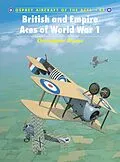
An illustrated history of how the British fighter developed, both single- and two-seaters.
At the outset of World War I the British had some 110 assorted aircraft, used mostly for the visual reconnaissance role. With the advent of faster and more agile single-seaters, the Allies and their adversaries raced to outdo each other in the creation of genuinely effective fighters with fixed forward-firing machine gun armament. It was not until 1917 that the British developed a truly effective interrupter gear, which paved the way for excellent single seaters such as the Sopwith Triplane Camel and the RAF S.E.5., later joined by the Bristol F.2B - the war's best two-seat fighter.
This volume traces the rapid development of the fighter in World War I and the amazing exploits of the British and Empire aces who flew them.
Autorentext
Christopher Shores is a well known author of authoritative aviation books, a specialist on aces and tactics.
Mark Rolfe is an extremely talented profile artist. He has worked on a number of titles in Osprey's Aircraft of the Aces and Combat Aircraft series.
Inhalt
Early days and the RFC
The Squadrons and their markings
The Royal Naval Air Service
The birth of the RAF