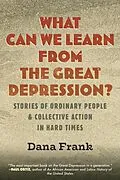
4 stories of resilience, mutual aid, and radical rebellion that will transform how we understand the Great Depression Drawing on little-known stories of working people, What Can We Learn from the Great Depression? amplifies voices that have been long omitted from standard histories of the Depression era. In four tales, Professor Dana Frank explores how ordinary working people in the US turned to collective action to meet the crisis of the Great Depression and what we can learn from them today. Readers are introduced to
- the 7 daring Black women who worked as wet nurses and staged a sit-down strike to demand better pay and an end to racial discrimination
- the groups who used mutual aid, cooperatives, eviction protests, and demands for government relief to meet their basic needs
- the million Mexican and Mexican American repatriados who were erased from mainstream historical memory, while (often fictitious) white "Dust Bowl migrants" became enshrined
- the Black Legion, a white supremacist fascist organization that saw racism, antisemitism, anti-Catholicism, and fascism as the cure to the Depression
Autorentext
Dana Frank is Professor Emerita of History at the University of California, Santa Cruz. A well-regarded senior historian, she is the author of many books on labor, women, and social justice in the US and Honduras. Her writing has appeared in the New York Times, Washington Post, Guardian, The Nation, Foreign Affairs, and many other publications, and she has testified before both the US Congress and Canadian Parliament.