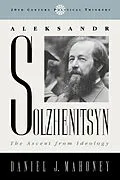
In Aleksandr Solzhenitsyn, Daniel Mahoney presents a philosophical perspective on the political condition of modern man through an exegesis and analysis of Solzhenitsyn's work. Mahoney demonstrates the tremendous, yet often unappreciated, impact of Solzhenitsyn's writing on twentieth century thinking through an examination of the writer's profoundly important critique of communist totalitarianism in a judicious and original mix of western and Russian, Christian and classical wisdom.
Autorentext
Daniel J. Mahoney is associate professor of political science at Assumption College in Worcester, Massachusetts. His previous books have dealt with Raymond Aron, Charles de Gaulle, Pierre Manent, and Aurel Kolnai. In 1999 he was awarded the prestigious Prix Aron.
Zusammenfassung
In Aleksandr Solzhenitsyn, Daniel Mahoney presents a philosophical perspective on the political condition of modern man through an exegesis and analysis of Solzhenitsyn's work. Mahoney demonstrates the tremendous, yet often unappreciated, impact of Solzhenitsyn's writing on twentieth century thinking through an examination of the writer's profoundly important critique of communist totalitarianism in a judicious and original mix of western and Russian, Christian and classical wisdom.
Inhalt
Chapter 1 Introductory Note: Taking Solzhenitsyn Seriously
Chapter 2 The One True Progress: Solzhenitsyn's Alternative to Modern Liberalism
Chapter 3 The Experience of Totalitarianism and the Recovery of Nature
Chapter 4 True and False Liberalism: Stolypin and His Enemies in August 1914
Chapter 5 The Ascent from Modernity:"Repentance and Self-Limitation in the Life of Nations"
Chapter 6 The Physiognomy of Liberty: Solzhenitsyn's "Tocquevillian" Defense of Local Self-Government
Chapter 7 Concluding Reflection: The Soul between Politics and Eternity