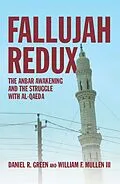
The city of Fallujah, Iraq will long be associated with some of the worst violence and brutality of the Iraq war. The battles to retake the city from insurgent fighters in 2004 have already indelibly carved its name into the historic annals of the U.S. military and occupy a revered place in the storied history of the United States Marine Corps. Initially occupied by U.S. forces in 2003, it eventually served as the headquarters for numerous insurgent groups operating west of Baghdad, including al-Qaeda in Iraq and its leader Abu Musab al-Zarqawi, until forcibly retaken at the end of 2004. Once the city was finally cleared, U.S. forces concentrated on trying to prevent it from returning to insurgent control by waging a counter insurgency campaign against both nationalist and extremist Islamist insurgent forces. It was a long, frustrating and, at times, brutal fight for control of the population with the eventual goal of setting the conditions for eventual Iraqi Government control and enabling U.S. forces to leave. Even though Coalition Forces were winning tactically, the initial policies of the Coalition Provisional Authority, which had deeply alienated the Sunni Arab population, negative press coverage of the ongoing violence, as well as the often clumsy and ineffective efforts of the developing Iraqi Security Forces served to make winning over the population a difficult process at best. The people of the area still strongly supported the nationalist insurgents and, although they often allied with the Islamists to push Coalition Forces out of Iraq, were frequently more terrified of the extremist Islamist insurgents than supportive. There seemed to be little U.S. forces could do to change the situation. By the middle of 2007, four years after the initial invasion of Iraq, the city of Fallujah and its surrounding countryside remained mired in a seemingly intractable cycle of violent action and counteraction between government security forces, assisted by U.S. forces, and the various insurgent groups. It was an unstable and chaotic time. It had even gotten to the point that some on the coalition side were beginning to wonder if Fallujah was being lost all over again. All of this began to change in 2007.
Progress up to that point had been slow, difficult to assess, and occurred in fits and starts. The hardest aspect of the counter-insurgency effort was maintaining a sense of enduring security for the population so that Iraqis would not have to live in constant fear of retribution from the different insurgent groups. Lacking an adequate Iraqi partner, this task was beyond the resources of U.S. forces in Anbar Province - something needed to change. Beginning in June 2007, local security conditions in Fallujah were fundamentally altered due to a concerted U.S. pacification campaign in the city, increased cooperation from local tribes, and greater efforts by Iraqi Security Forces. This campaign took advantage of the tide of the Al Anbar Awakening Movement that was sweeping the province from west to east as the tribes in the area and the broader Sunni Arab community began to turn against al-Qaeda in 2006 and 2007. As this movement gained momentum, Fallujah's residents were waiting for it to push eastward in order to help them eliminate al-Qaeda from their own communities. Even though the local population had not yet risen up against the terrorist group, they were keen to do so and needed the help of U.S. forces. The campaign described in this book gave them this opportunity.
Progress up to that point had been slow, difficult to assess, and occurred in fits and starts. The hardest aspect of the counter-insurgency effort was maintaining a sense of enduring security for the population so that Iraqis would not have to live in constant fear of retribution from the different insurgent groups. Lacking an adequate Iraqi partner, this task was beyond the resources of U.S. forces in Anbar Province - something needed to change. Beginning in June 2007, local security conditions in Fallujah were fundamentally altered due to a concerted U.S. pacification campaign in the city, increased cooperation from local tribes, and greater efforts by Iraqi Security Forces. This campaign took advantage of the tide of the Al Anbar Awakening Movement that was sweeping the province from west to east as the tribes in the area and the broader Sunni Arab community began to turn against al-Qaeda in 2006 and 2007. As this movement gained momentum, Fallujah's residents were waiting for it to push eastward in order to help them eliminate al-Qaeda from their own communities. Even though the local population had not yet risen up against the terrorist group, they were keen to do so and needed the help of U.S. forces. The campaign described in this book gave them this opportunity.
Autorentext
Daniel R. Green is a defense fellow at The Washington Institute for Near East Policy in Washington, D.C. He served in Fallujah, Iraq, in 2007 as a tribal and leadership engagement officer and is a lieutenant commander in the U.S. Navy Reserve. He received his PhD in political science from The George Washington University in 2012. Brig. Gen. William F. Mullen, IIII USMC is a twenty-seven-year Marine infantry officer based in Quantico, Virginia, whose experience with Fallujah began when he served in the city as the operations officer for a Marine regimental combat team from 2005 to 2006, then as an infantry battalion commander in charge of the city for most of 2007.
Klappentext
Fallujah Redux is the first book about the Fallujah Awakening written by Operation Iraqi Freedom military veterans who served there, providing a comprehensive account of the turning of Fallujah away from the al-Qaeda insurgency in 2007. The city of Fallujah will long be associated with some of the worst violence and brutality of the Iraq War. Initially occupied by U.S. forces in 2003, it eventually served as the headquarters for numerous insurgent groups operating west of Baghdad, including al-Qaeda in Iraq and its leader Abu Musab al-Zarqawi, until forcibly retaken at the end of 2004. Once the city was finally cleared, U.S. forces settled into the routine of waging a low-intensity warfare campaign against insurgent forces and trying to set the conditions for Iraqi government control. Even though U.S. forces were winning tactically, they struggled with a population that still strongly supported the insurgency. By the middle of 2007, four years after the initial invasion of Iraq, the city of Fallujah and its surrounding countryside were still mired in a seemingly intractable insurgency. As Anbar Province's tribes began to turn against al-Qaeda, Fallujah's residents were waiting for the movement to push eastward to help them eliminate al-Qaeda but they needed the help of U.S. forces. A concerted pacification campaign, in coordination with tribal efforts, was implemented by U.S. and Iraqi security forces that fundamentally altered local security conditions in Fallujah. This book describes the campaign that turned Fallujah from a perennial insurgent hotspot to an example of what can be achieved by the right combination of leadership and perseverance. Many books have told of the major battles in Fallujah-this book tells the rest of the story that never made the news.
Titel
Fallujah Redux
Untertitel
The Anbar Awakening and the Struggle with Al-Qaeda
EAN
9781612511436
ISBN
978-1-61251-143-6
Format
E-Book (epub)
Hersteller
Herausgeber
Veröffentlichung
15.09.2014
Digitaler Kopierschutz
Wasserzeichen
Dateigrösse
4.27 MB
Anzahl Seiten
192
Jahr
2014
Untertitel
Englisch
Unerwartete Verzögerung
Ups, ein Fehler ist aufgetreten. Bitte versuchen Sie es später noch einmal.