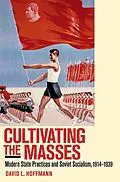
Under Stalin's leadership, the Soviet government carried out a massive number of deportations, incarcerations, and executions. Paradoxically, at the very moment that Soviet authorities were killing thousands of individuals, they were also engaged in an enormous pronatalist campaign to boost the population. Even as the number of repressions grew exponentially, Communist Party leaders enacted sweeping social welfare and public health measures to safeguard people's well-being. Extensive state surveillance of the population went hand in hand with literacy campaigns, political education, and efforts to instill in people an appreciation of high culture.
In Cultivating the Masses, David L. Hoffmann examines the Party leadership's pursuit of these seemingly contradictory policies in order to grasp fully the character of the Stalinist regime, a regime intent on transforming the socioeconomic order and the very nature of its citizens. To analyze Soviet social policies, Hoffmann places them in an international comparative context. He explains Soviet technologies of social intervention as one particular constellation of modern state practices. These practices developed in conjunction with the ambitions of nineteenth-century European reformers to refashion society, and they subsequently prompted welfare programs, public health initiatives, and reproductive regulations in countries around the world.
The mobilizational demands of World War I impelled political leaders to expand even further their efforts at population management, via economic controls, surveillance, propaganda, and state violence. Born at this moment of total war, the Soviet system institutionalized these wartime methods as permanent features of governance. Party leaders, whose dictatorship included no checks on state power, in turn attached interventionist practices to their ideological goal of building socialism.
Autorentext
David L. Hoffmann is Professor of History at The Ohio State University. He is the author of Stalinist Values: The Cultural Norms of Soviet Modernity, 1917-1941 and Peasant Metropolis: Social Identities in Moscow, 1929-1941, both from Cornell. He is also the editor of Russian Modernity: Politics, Knowledge, Practices and Stalinism: The Essential Readings.
Inhalt
Introduction1. Social Welfare
Cameralism, Social Science, and the Origins of Welfare
The Social Realm in Russia
Warfare and Welfare
The Soviet Welfare State2. Public Health
Social Medicine and the State
Social Hygiene
Foreign Influences on Soviet Health Care
Physical Culture and Its Militarization3. Reproductive Policies
Birthrates and National Power
Contraception, Abortion, and Reproductive Health
Promoting Motherhood and Family
Eugenics
Infant Care and Childraising4. Surveillance and Propaganda
Monitoring Popular Moods
Wartime Propaganda
Soviet Surveillance
Political Enlightenment
The New Soviet Person5. State Violence
Origins of Modern State Violence
Internments, Deportations, and Genocide during the First World War
The Russian Civil War and the 1920s
Collectivization and Passportization
The Mass Operations
The National OperationsConclusionArchives Consulted
Index