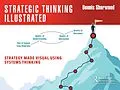
This book is about the behaviour of systems. Systems are important, for we interact with them all the time, and many of the actions we take are influenced by a system - for example, the system of performance measures in an organisation influences, often very strongly, how individuals within that organisation behave. Furthermore, sometimes we are involved in the design of systems, as is any manager contributing to the definition of what those performance measures might be. That manager will want to ensure that all the proposed performance measures will drive the 'right' behaviours rather than (inadvertently) encouraging dysfunctional 'game playing', and so anticipating how the performance measurement system will work in practice is a vital part of a wise design process.
Some of the systems with which we interact are local, such as your organisation's performance measurement system. Some systems, however, are distant, but nonetheless very real, such as the healthcare system, the education system, the legal system and the climate system. Systems, therefore, exist on all scales, from the local to the global. And all systems are complex, some hugely so. That's why understanding how systems behave can be very helpful.
Systems are complex for two main reasons. First, the manner in which they behave over time can be very hard to anticipate - and anticipating the future sensibly is of course a key objective of management. Second, the 'entities' within a system can be connected together in very complex ways, so that an intervention 'here' can result in an effect 'there', perhaps a long time afterward. Sometimes this can be surprising, and so we talk of 'unintended consequences' - but this is of course a euphemism for 'because I didn't understand how this system behaves, I had not anticipated that'.
Systems thinking, the subject matter of this book, is the disciplined study of systems, and causal loop diagrams - the 'pictures' of this 'picture book' - are a very insightful way to represent the connectedness of the entities from which any system is composed, so taming that system's complexity.
Autorentext
Dennis Sherwood is currently the managing director of The Silver Bullet Machine Manufacturing Company Limited, specializing in creativity, innovation, and systems thinking. His Previous positions include: -- Consulting Partner, Deloitte Haskins + Sells, and subsequently Coopers & Lybrand -- Executive Director, Goldman Sachs -- Managing Director, UK operations, SRI Consulting (Stanford Research Institute). He has been using systems thinking since 1984 and is one of the UK's leading experts. He is the author of many journal articles, and their modern equivalent, blogs. In addition, he has authored 11 books on a variety of subjects, the first published in 1971 by Longman, the most recent in 2018 by Oxford University Press He holds a degree from Cambridge (Natural Sciences, Part II Physics) as well as an MPhil from Yale (Molecular Biophysics and Biochemistry) and a Ph.D. from the University of California at San Diego (Biology). He is a Sloan Fellow (with distinction) of London Business School.
Klappentext
This book is about the behavior of systems. Systems are important, for we interact with them all the time, and many of the actions we take are influenced by a system - for example, the system of performance measures in an organization influences, often very strongly, how individuals within that organization behave. Furthermore, sometimes we are involved in the design of systems, as is any manager contributing to the definition of what those performance measures might be. That manager will want to ensure that all the proposed performance measures will drive the 'right' behaviors, rather than (inadvertently) encouraging dysfunctional 'game playing', and so anticipating how the performance measurement system will work in practice is a vital part of a wise design process. Some of the systems with which we interact are local, such as your organization's performance measurement system. Some systems, however, are distant, but nonetheless very real, such as the health care system, the education system, the legal system, and the climate system. Systems, therefore, exist on all scales, from the local to the global. And all systems are complex, some hugely so. That's why understanding how systems behave can be very helpful. Systems are complex for two main reasons. Firstly, the manner in which they behave over time can be very hard to anticipate - and anticipating the future sensibly is of course a key objective of management. Secondly, the 'entities' within a system can be connected together in very complex ways, so that an intervention 'here' can result in an effect 'there', perhaps a long time afterward. Sometimes this can be surprising, and so we talk of "unintended consequences" - but this is of course a euphemism for "because I didn't understand how this system behaves, I had not anticipated that." Systems thinking, the subject matter of this book, is the disciplined study of systems, and causal loop diagrams -- the "pictures" of this "picture book" are a very insightful way to represent the connectedness of the entities from which any system is composed, so taming that system's complexity.
Inhalt
Part 1 - Systems
Chapter 1 - Systems and mental models
Chapter 2 - Links and dangles
Chapter 3 - Causal loop diagrams
Chapter 4 - Reinforcing loops
Chapter 5 - Balancing loops
Chapter 6 - Targets and budgets
Part 2 - Applications
Chapter 7 - Competitive markets
Chapter 8 - Controlling stock levels
Chapter 9 - Queues, angry customers, borrowing, supply and demand
Chapter 10 - Prices, inflation, economic depression and growth
Chapter 11 - Conflict - and teamwork
Chapter 12 - Businesses are inherently 'joined up'
Chapter 13 - Targets and budgets in practice
Chapter 14 - Teachers behaving badly
Chapter 15 - Perverse incentives and unintended consequences
Chapter 16 - Delivering General Practice
Chapter 17 - The climate crisis
Part 3 - Over to you!
Chapter 18 - How to draw causal loop diagrams
Chapter 19 - How to use causal loop diagrams
Some good things to read
Some resources