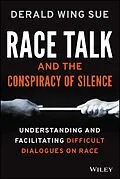
Learn to talk about race openly, honestly, and productively
Most people avoid discussion of race-related topics because of
the strong emotions and feelings of discomfort that inevitably
accompany such conversations. Rather than endure the conflict of
racial realities, many people choose instead to avoid the topic
altogether, or remain silent when it is raised. Race Talk and
the Conspiracy of Silence: Understanding and Facilitating Difficult
Dialogues on Race puts an end to that dynamic by sharing
strategies for smoothing conversations about race in a productive
manner.
A guide for facilitating and participating in difficult
dialogues about race, author Derald Wing Sue - an
internationally recognized expert on multiculturalism, diversity,
and microaggressions - explores the characteristics,
dynamics, and meaning behind discussions about race as well as the
hidden "ground rules" that inhibit honest and productive dialogue.
Through emotional and visceral examples, this book explains why
conversations revolving around racial issues are so difficult, and
provides guidelines, techniques, and advice for navigating and
leading honest and forthright discussions. Readers will develop a
stronger ability to build rapport with people unlike themselves,
and discover how not talking about race impacts society as a
whole.
* Overcome and make visible the fears associated with race
talk
* Learn practical ideas for talking openly about race
* Facilitate and navigate discussion with expert strategy
* Examine the hidden rules that govern race talk
* Understand the benefits of successful conversations
Discussions about race do not have to result in disastrous
consequences, and can in fact be highly beneficial to all parties
involved. It's important that people have the ability to converse
openly and honestly with their students, colleagues, children, and
neighbors, and Race Talk provides the path for achieving
this goal.
Autorentext
Derald Wing Sue, PhD, is Professor of Psychology and Education at Teachers College, Columbia University. He was?Co-Founder and first President of the Asian American Psychological Association, and past President of the?Society for the Psychological Study of Ethnic Minority Issues and the Society of Counseling Psychology. Dr Sue?serves on the Council of Elders for?Cultural Diversity and Ethnic Minority Psychology. His current research explores the manifestation, dynamics, and impact of racial, gender, and sexual orientation microaggressions. He currently applies this research to strategies for facilitating difficult?dialogs on race in the classroom and public forums and conducts training sessions across the U.S. and Canada to help institutions improve relations among community members.
Zusammenfassung
Learn to talk about race openly, honestly, and productively
Most people avoid discussion of race-related topics because of the strong emotions and feelings of discomfort that inevitably accompany such conversations. Rather than endure the conflict of racial realities, many people choose instead to avoid the topic altogether, or remain silent when it is raised. Race Talk and the Conspiracy of Silence: Understanding and Facilitating Difficult Dialogues on Race puts an end to that dynamic by sharing strategies for smoothing conversations about race in a productive manner.
A guide for facilitating and participating in difficult dialogues about race, author Derald Wing Sue an internationally recognized expert on multiculturalism, diversity, and microaggressions explores the characteristics, dynamics, and meaning behind discussions about race as well as the hidden "ground rules" that inhibit honest and productive dialogue. Through emotional and visceral examples, this book explains why conversations revolving around racial issues are so difficult, and provides guidelines, techniques, and advice for navigating and leading honest and forthright discussions. Readers will develop a stronger ability to build rapport with people unlike themselves, and discover how not talking about race impacts society as a whole.
- Overcome and make visible the fears associated with race talk
- Learn practical ideas for talking openly about race
- Facilitate and navigate discussion with expert strategy
- Examine the hidden rules that govern race talk
- Understand the benefits of successful conversations
Discussions about race do not have to result in disastrous consequences, and can in fact be highly beneficial to all parties involved. It's important that people have the ability to converse openly and honestly with their students, colleagues, children, and neighbors, and Race Talk provides the path for achieving this goal.
Inhalt
Preface ix
Preface to the Paperback Edition xv
Acknowledgments xix
About the Author xxi
Section One The Characteristics, Dynamics, and Meaning of Race Talk
Chapter One What is Race Talk? 3
Race Talk Represents a Potential Clash of Racial Realities 7
Race Talk Pushes Emotional Hot Buttons 11
Race Talk Evokes Avoidance Strategies 13
Why is Successful Race Talk Important? 16
Chapter Two The Characteristics and Dynamics of Race Talk 18
What Are Characteristics of Race Talk? 21
How Do Societal Ground Rules (Norms) Impede Race Talk? 23
Why is Race Talk So Difficult and Uncomfortable for Participants? 27
Conclusions 33
Chapter Three The Stories We Tell: White Talk Versus Back Talk 35
Race Talk: Narratives and Counter-Narratives 37
Telling on Racism: Unmasking Ugly Secrets 38
Section Two The Constraining Ground Rules for Race Talk
Chapter Four The Entire World's a Stage! 55
The Politeness Protocol and Race Talk 57
The Academic Protocol and Race Talk 64
Chapter Five Color-Blind Means Color-Mute 74
Color-Evasion: We Are All the Same Under the Skin 78
Stereotype-Evasion: I Don't Believe in Those Stereotypes 82
Power-Evasion: Everyone Can Make It in Society, If They Work Hard Enough 86
Myth of the Melting Pot 89
Section Three Why is it Difficult for People of Color to honestly talk about race?
Chapter Six What Are the Consequences for Saying What I Mean? 95
Ethnocentric Monoculturalism 99
Power and Oppression 105
Chapter Seven To Speak or How to Speak, That is the Question 112
Communication Styles 115
Nonverbal Communication 118
Nonverbal Communication in Race Talk: Sociopolitical Considerations 121
Being Constrained and Silenced: Impact on People of Color 123
Conclusions 127
Section Four Why is It Difficult for White People to Honestly Talk About Race?
Chapter Eight I'm Not Racist! 131
Cognitive AvoidanceRacism Denial 133
Emotional AvoidanceFear, Guilt, and Other Feelings 138
Behavioral AvoidanceHelplessness and Hopelessness 142
Emotional Roadblocks to Race Talk 144
Chapter Nine I'm Not White; I'm Italian! 147
What Does It Mean to Be White? 148
The Invisibility of Whiteness: What Does It Mean? 152
The Fear of Owning White Privilege 154
Fear of Taking Personal Responsibility to End Racism: Moving From Being Nonracist to Becoming Antiracist 159
Section Five Race Talk and Special Group Considerations
Chapter Ten Interracial/Interethnic Race Talk: Difficult Dialogues Between Groups of Color 167
Interracial/Interethnic Relationship Issues 169
Race Talk: Fears of Divide and Conquer 171