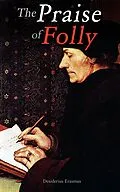
The Praise of Folly is a treatise written by Desiderius Erasmus of Rotterdam and it is a satirical attack on superstitions, various traditions of European society and on the Latin Church. The Praise of Folly begins with a satirical learned encomium, in which Folly praises herself, in the manner of the Greek satirist Lucian, whose work Erasmus and Sir Thomas More had recently translated into Latin; it then takes a darker tone in a series of orations, as Folly praises self-deception and madness and moves to a satirical examination of pious but superstitious abuses of Catholic doctrine and corrupt practices in parts of the Roman Catholic Church-to which Erasmus was ever faithful-and the folly of pedants. The treatise is filled with classical allusions delivered in a style typical of the learned humanists of the Renaissance.
Autorentext
Desiderius Erasmus of Rotterdam (1466-1536) was a Dutch philosopher and Catholic theologian who is considered one of the greatest scholars of the northern Renaissance. As a Catholic priest, he was an important figure in classical scholarship who wrote in a pure Latin style.