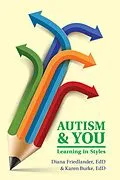
Everyone has different learning-style preferences, strengths, and challenges in the classroom. This book will give you information about your learning style and your type of autism so you can make a plan for success.
Also available in this book:
. Complete learning style descriptions
. Fun learning games, images & instruction
. A complete "Help Guide" to Learning Style: The Clue to You (LS:CY) Assessment
Autorentext
Diana Friedlander, EdD is an elementary special education teacher in Ridgefield, CT. She is also an adjunct professor at Western Connecticut State University (WCSU), Danbury, CT. where she teaches in both the undergraduate and graduate teacher education programs. Dr. Friedlander has taught students with autism for over 40 years in both private and public schools where she has been an advocate for the successful inclusion of students with special needs into the general education classroom. Her research investigated differences and similarities in learning styles of students with autism and their typical peers. A life-long student, Dr. Friedlander has just begun fencing, something she has always wanted to learn.
Inhalt
Chapter One: So You Have Autism
How It All Began
Understanding Autism
Autism In The Classroom
Chapter Two: You Also Have a Learning Style
Where You Learn Matters
How You Feel About Your Learning Matters
People You Choose To Learn With Matters
How Your Body Feels While You Are Learning Matters
How You Understand Information Matters
Chapter Three: Discovering Your Learning Style: Taking a Test You Can't Fail
What Does the LS:CY! Assessment Test Do?
Preparing to Take the LS:CY!
Discovering Your Learning Style
Understanding of Learning Styles
The Results
Chapter Four: Strategies to Help You Feel More Comfortable While You Are Learning
Sound verses Silence
Bright light verses Soft Light
Warm verses Cool Temperatures
Formal Seating verses Informal Seating
Chapter Five: Strategies for Using Hands-On Learning: Tactile Learner Take Notice!
Materials and Directions for Making Tactile Materials
Chapter Six: Strategies for Understanding Ways You Learn Best
Understanding Analytical Learning : Step by Step Learning
Understanding Global Learning: Looking At the Whole Picture Before
Breaking It Down
Chapter Seven: Understanding With Whom You Learn Best and Managing Your Time
Chapter Eight: Putting It All Together