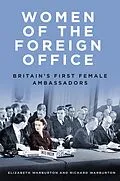
Since the suffrage campaigns in the early twentieth century, the advancement of women's rights in the UK has been nonstop. Proponents of the cause have aimed for equality across all sectors: personal and civil rights, employment rights, equal pay - and yet Britain's first official female ambassador did not take up her position until 1976. Many obstacles lay between a capable, educated woman and the fulfilment of her potential. Here, Elizabeth and Richard Warburton cast a detailed eye over the advancement of women in the Foreign Office, as diplomats, ambassadors, ministers and Foreign Secretary. Leaving no stone unturned, they discuss the culturally conservative, closed pillar of the Foreign Office in the context of the times, and of the development of women's rights both in the UK and across the first world. Supported by first-person accounts, they explore the stories of those who successfully broke through the constraints of convention, prejudice and law, and why.
Autorentext
Elizabeth J. Warburton is a former employee of HM Foreign and Commonwealth Office, after which she became a researcher for print and broadcast media. She is the niece of the first British female ambassador Dame Anne Warburton DCVO CMG.
Klappentext
Seemingly starting with the Suffragettes in the early twentieth century, the advancement of women's rights in the UK has been nonstop in the succeeding decades. Proponents of the cause have aimed for equality across all sectors: personal and civil rights, employment rights, equal pay - and yet Britain's first official female ambassador was not appointed by the Foreign and Commonwealth Office until 1976. Here Elizabeth and Richard Warburton cast a detailed eye over the advancement of women as diplomats and ambassadors up to the appointment of Dame Anne Warburton. Leaving no stone unturned, they explore the culturally conservative, closed pillar of the Establishment - the Foreign Office - in the context of the times, and of the development of women's rights both in the UK and across the first world. Potted biographies of key players, including the three women who reached ambassador level, are supported by first-person accounts of what it was like to be a woman ambassador, and why they were the ones called to the task, filling an important gap in the wide topic of women's history.