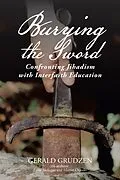
Burying the Sword: Counteracting Jihadism with Interfaith Education This book analyzes the historical and political context in which various forms of violent extremism (jihadism) have emerged in the Middle East, Europe, and in Africa since 9/11/2001. The growth of the jihadism can be attributed in part to the oppressive regimes of the Middle East which have curtailed the democratic impulses of their youth. Alternative youth movements such as we saw in the Arab Spring can serve as a source of inspiration and model for renewal of these regions. The book also analyzes the role that technology can play in organizing future youth movements and serve as part of an interfaith educational program that has already been initiated in Kenya. New models of interfaith education in public and private schools throughout Africa are needed to counteract the growth of extremist ideologies among the youth of this region.
Vorwort
Jihadism among Muslim youth is a mystery to most Americans. Grudzen's book explains with great clarity the origins ofthe jihadist movements that have created fear and anxiety in the West. Grudzen also shows a path forward to helpAmerica and the rest of the world confront the jihadist menace with various forms of enlightened education such as wefind taking place in Africa. Grudzen's book explains how Islamophobia and fear of immigrants helps groups such as ISIS to recruit members toits fundamentalist vision of the world. Apocalyptic language found within ISIS mirrors the kind of dichotomous view ofthe world now gaining power both in Great Britain and the U.S. Grudzen shows that Muslims in the U.S. have become well integrated into U.S. economic, political and interfaith systems. It shows that U.S. Muslims can be role modelsfor a pluralistic understanding of religion in the twenty first century. Grudzen's book explains why jihadist groups have been able to recruit Muslim youth to their fundamentalist vision of the world. The Sunni version of Islam has been held captive by authoritarian leaders who have promulgated the Wahhabisttheology which has spread to many parts of the world were there are marginalized Muslim youth. The role of colonialismand imperialism in the Middle East has also aggravated the situation for Muslim youth who lack creative outlets fortheir future.Technology can play a key role in reaching Muslim youth with a message of hope and idealism rather than the darknessspawned by ISIL. Recent technological developments in Africa and the Middle East can be utilized by Western governments,business leaders and NGO's to reach out to Muslim youth and engage their energies in a productive manner. The interfaith education project developed by Grulzen and his colleagues in Kenya can be a model for other developing areasof the world in which jihadism has developed.The Gulen or Hizmet movement has played a constructive educational role throughout much of Africa including Kenya.Grudzen's book explains the educational philosophy of the Gulen affiliated schools in Kenya as a possible modelfor the developing world.
Autorentext
Gerald Grudzen has taught courses in Comparative Religion, Philosophy and the Humanities For the past 19 years for the University of Phoenix and the past 12 years for San Jose City College. In addition he presently serves as President of Global Ministries University which provides Online theological and interfaith education courses and degrees for students and faculty located throughout the world. He earned his PhD in the history of Christianity and Islam from Columbia University and holds two theological degrees from the Maryknoll School of Theology. Grudzen was awarded a Templeton Foundation grant for development of a curriculum in the field of religion and science which was published as Spirituality and Science: Greek, Judeo-Christian and Muslim Perspectives. For the past six years Gerald and Marita Grudzen have developed an interfaith training seminar In Kenya cosponsored by Global Ministries University and known as Paths to Peace Kenya.
Zusammenfassung
Burying the Sword: Counteracting Jihadism with Interfaith EducationThis book analyzes the historical and political context in which various forms of violent extremism (jihadism) have emerged in the Middle East, Europe, and in Africa since 9/11/2001. The growth of the jihadism can be attributed in part to the oppressive regimes of the Middle East which have curtailed the democratic impulses of their youth. Alternative youth movements such as we saw in the Arab Spring can serve as a source of inspiration and model for renewal of these regions. The book also analyzes the role that technology can play in organizing future youth movements and serve as part of an interfaith educational program that has already been initiated in Kenya. New models of interfaith education in public and private schools throughout Africa are needed to counteract the growth of extremist ideologies among the youth of this region.