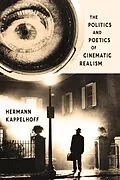
Hermann Kappelhoff casts the evolution of cinema as an ongoing struggle to relate audiences to their historical moment. Appreciating cinema's unique ability to bind concrete living conditions to individual experience (which existing political institutions cannot), he reads films by Sergei Eisenstein and Pedro Almodóvar, by the New Objectivity and the New Hollywood, to demonstrate how cinema situates spectators within society.
Kappelhoff applies the Deleuzean practice of "thinking in images" to his analysis of films and incorporates the approaches of Jacques Rancière and Richard Rorty, who see politics in the permanent reconfiguration of poetic forms. This enables him to conceptualize film as a medium that continually renews the audiovisual spaces and temporalities through which audiences confront reality. Revitalizing the reading of films by Visconti, Fassbinder, Kubrick, Friedkin, and others, Kappelhoff affirms cinema's historical significance while discovering its engagement with politics as a realm of experience.
Autorentext
Hermann Kappelhoff is a professor in the Department for Film Studies at the Freie Universität Berlin. He is the author of Matrix der Gefühle: Das Kino, das Melodrama und das Theater der Empfindsamkeit, a major study on the cinematic melodrama as a paradigm of artificial emotions.
Inhalt
Preface and Acknowledgments
1. Poetics and Politics
2. Before the War: The Avant-garde, Film, and the Utopia of Art
3. After the War: Cinema as the Site of Historical Consciousness
4. After '68: The Politics of Form
5. Beyond Classical Hollywood Cinema
6. A New Sensitivity
Notes
Bibliography
Index