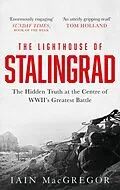
'Stunning. History at its very best: a blend of impeccably researched scholarship, genuinely revelatory primary sources, and a beautifully written narrative' - James Holland
'The sheer brutal intimacy of his descriptions of the fighting are extraordinary' - Frederick Taylor
'A wonderful and important and timely book' - Alexander Kershaw, New York Times bestselling author of The Bedford Boys and First Wave
'An authoritative and unforgettable insight into the decisive days of that most terrible struggle on the banks of the Volga' - Jonathan Dimbleby
'An utterly gripping read' - James Holland
'MacGregor writes with great fluency and narrative drive . . . compellingly terse' - William Boyd
'Magisterial' - Dan Snow
The sacrifices that enabled the Soviet Union to defeat Nazi Germany in the Great Patriotic War 1941-45 are sacrosanct. The foundation of their eventual victory was laid during the battle for the city of Stalingrad, resting on the banks of the river Volga. For Germany, the catastrophic defeat was the beginning of their eventual demise that would see the Red Army two years later flying their flag of victory above the Reichstag. Stalingrad is seen as the pivotal battle of the Second World War, with over two million civilians and combatants either killed, wounded or captured during the bitter winter of September 1942. Both sides endured terrible conditions in brutal house-to-house fighting reminiscent of the Great War.
Within this life-and-death struggle for the heart of the city and situated on the frontline was a key strategic building, codenamed: 'The Lighthouse'. Here, a small garrison of Red Army guardsmen withstood German aerial bombardments and fought off daily assaults of infantry and armour. Red Army newspaper reports at the time would be seized upon by the Moscow media needing to place a positive spin on the fighting that had at one point looked beyond salvation. By the end of the war, the story of this building would gather further momentum to inspire Russians to rebuild their destroyed towns and cities until it became the legend it is today, renamed after the simple sergeant who had supposedly led the defence - 'Pavlov's House'.
In time for the eightieth anniversary, The Lighthouse of Stalingrad will shed fresh insight on this iconic battle through the prism of the men who fought one another over five months and the officers who commanded them. A riveting narrative, informed by both German and Russian archives to unearth unpublished memoirs and eyewitness testimonies from veterans and civilians alike, this book will celebrate the real heroes and provide a truer picture of how this mighty battle finally ended.
Autorentext
Iain MacGregor
Klappentext
To the Soviet Union, the sacrifices that enabled the country to defeat Nazi Germany in the Great Patriotic War 1941-45 are quite rightly sacrosanct. The battle for the city of Stalingrad between September 1942 to the beginning of February 1943 is a pivotal landmark of this sacrifice. It was the most decisive of the Second World War with over two million combatants killed, wounded or captured. It was also the bloodiest in history. July 2022 will mark the eightieth anniversary of the start of the campaign in Southern Russia ('Case Blue') that Adolf Hitler predicted would knock the Soviets out of the war. The culmination of this campaign would end in the showpiece city's ruins that stretched along the mighty Volga river as German and Soviet armies battled for its occupancy in brutal house-to-house fighting which lasted five months.
Within this deadly struggle Soviet war correspondents such as Vasily Grossman lauded the fight for a key strategic building in the heart of the city, 'Pavlov's House', situated right on the frontline, codenamed: 'The Lighthouse'. Standing a few hundred metres from the river the legend grew of a small garrison of Russia guardsmen holding out against overwhelming odds right up until the battle had been won.
In this riveting narrative, unearthing new German and Russian testimonies from those who fought there, The Lighthouse of Stalingrad sheds new light on this iconic conflict that established Soviet dominance in the East and thus guaranteed the Third Reich's defeat in the ruins of Berlin two years later.
Praise for Checkpoint Charlie:
'Highly recommended' Frederick Taylor, author of The Berlin Wall and Dresden
'Iain MacGregor writes with great fluency and narrative drive . . . a powerful and moving experience' William Boyd, New Statesman
'Lively . . . the voices [MacGregor] has saved, and the richly researched skill of his narrative at big moments, rescue an echo of one of the many lost Berlins' Observer
'In capturing the essence of the old Cold War he may just have helped us to understand a bit more about the new one' The Times