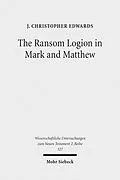
The ransom logion, as presented in Mark 10:45/Matthew 20:28, is the only place in the synoptic gospels outside the Last Supper where Jesus gives a beneficial interpretation of his upcoming death. This fact has generated much discussion about the authenticity and scriptural background of the ransom logion in Mark and Matthew. However, no one has examined the early reception of the ransom logion, nor has anyone explored the significance of that reception for the critical study of Mark 10:45 and Matthew 20:28. In this study J. Christopher Edwards fills these lacunae by examining the reception of the ransom logion from the New Testament through the third century and by exploring the potential significance of that reception for the critical study of Mark and Matthew. The rationale for this exploration relies on the fact that there are observable patterns displayed in the reception of the ransom logion, which may reflect how it functions in Mark 10:45 and Matthew 20:28.
Born 1982; Associate Professor in Religious Studies at St. Francis College (Brooklyn Heights, NY).
Autorentext
Zusammenfassung
Das Lösegeld-Logion, wie es in Markus 10:45 und Matthäus 20:28 dargestellt wird, ist außerhalb des Abendmahls die einzige Stelle in den synoptischen Evangelien, in der Jesus seinen bevorstehenden Tod deutet. Diese Tatsache hat eine heftige Diskussion über die Authentizität und den biblischen Hintergrund des Lösegeld-Logions in Markus und Matthäus ausgelöst. Dennoch wurde weder die Wahrnehmung dieses Logion im frühen Christentum untersucht, noch die Bedeutung seiner Rezeption in Markus und Matthäus erforscht. Diese Lücke wird von J. Christopher Edwards durch diese Studie geschlossen, indem er die Rezeption des Lösegeld-Logions beginnend beim Neuen Testament bis ins dritte Jahrhundert untersucht und die mögliche Bedeutung der Rezeption für die kritische Analyse der Schriften von Markus und Matthäus erforscht. Dieses Vorgehen hat seinen legitimen Grund darin, dass sich in der Rezeption der Bedeutung des Lösegeld-Logions bestimmte Muster erkennen lassen, die ihrerseits erhellen, wie das Lösegeld-Logion im Kontext des Markus- und des Matthäusevangeliums verstanden werden könnte.
Born 1982; Associate Professor in Religious Studies at St. Francis College (Brooklyn Heights, NY).
Autorentext
Born 1982; Associate Professor in Religious Studies at St. Francis College (Brooklyn Heights, NY).
Zusammenfassung
Das Lösegeld-Logion, wie es in Markus 10:45 und Matthäus 20:28 dargestellt wird, ist außerhalb des Abendmahls die einzige Stelle in den synoptischen Evangelien, in der Jesus seinen bevorstehenden Tod deutet. Diese Tatsache hat eine heftige Diskussion über die Authentizität und den biblischen Hintergrund des Lösegeld-Logions in Markus und Matthäus ausgelöst. Dennoch wurde weder die Wahrnehmung dieses Logion im frühen Christentum untersucht, noch die Bedeutung seiner Rezeption in Markus und Matthäus erforscht. Diese Lücke wird von J. Christopher Edwards durch diese Studie geschlossen, indem er die Rezeption des Lösegeld-Logions beginnend beim Neuen Testament bis ins dritte Jahrhundert untersucht und die mögliche Bedeutung der Rezeption für die kritische Analyse der Schriften von Markus und Matthäus erforscht. Dieses Vorgehen hat seinen legitimen Grund darin, dass sich in der Rezeption der Bedeutung des Lösegeld-Logions bestimmte Muster erkennen lassen, die ihrerseits erhellen, wie das Lösegeld-Logion im Kontext des Markus- und des Matthäusevangeliums verstanden werden könnte.
Titel
The Ransom Logion in Mark and Matthew
Untertitel
Its Reception and Its Significance for the Study of the Gospels
Autor
EAN
9783161521096
ISBN
978-3-16-152109-6
Format
E-Book (pdf)
Hersteller
Herausgeber
Digitaler Kopierschutz
Adobe-DRM
Dateigrösse
2.66 MB
Anzahl Seiten
200
Jahr
2012
Untertitel
Englisch
Unerwartete Verzögerung
Ups, ein Fehler ist aufgetreten. Bitte versuchen Sie es später noch einmal.