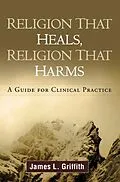
Psychotherapists and counselors from a range of backgrounds, including clinical psychologists, psychiatrists, clinical social workers, couple and family therapists, and pastoral counselors. May serve as a text in graduate-level courses such as Spirituality and Psychotherapy, Pastoral Counseling, and Psychology of Religion.


Autorentext

James L. Griffith, MD, is Professor of Psychiatry and Neurology and Associate Chair of the Department of Psychiatry and Behavioral Sciences at the George Washington University Medical Center in Washington, DC. He also is Director of the Psychiatry Residency Program and Director of the Psychiatric Consultation-Liaison Service at George Washington University Hospital. As an educator, Dr. Griffith has developed a program of psychiatric residency training that balances biological and psychosocial therapies in the treatment of patients within their family, community, and cultural contexts. Currently, he provides psychiatric treatment for immigrants, refugees, and survivors of political torture at Northern Virginia Family Services in Falls Church, Virginia. He is a recipient of the Human Rights Community Award from the United Nations Association of the National Capital Area, the Margaret B. and Cyril A. Schulman Distinguished Service Award from the George Washington University Medical Center, the Psychiatrist of the Year Award from the Washington Psychiatric Society, the Distinguished Teacher Award from the George Washington University School of Medicine,and, most recently, the Creative Scholarship Award from the Society for the Study of Psychiatry and Culture.


Inhalt

Introduction. When Religion Goes Bad: A Mental Health Problem?
I. A Map for Navigating the Terrain of Religion
1. What Sociobiology Explains about Destructive Uses of Religion
2. What Neurobiology Explains about Destructive Uses of Religion
3. Setting the Stage: Opening Dialogue about Religious Life
4. Locating Personal Spirituality through Existential Inquiry
II. When Religious Life Propels Suffering
5. Seeking a Parent in God: Clinical Problems from Insecure Attachments
6. Seeking Security within the Flock: Clinical Problems from Social Hierarchy, Peer Affiliation, and Reciprocal Altruism
7. Asserting Primacy of Personal Spirituality over Sociobiological Religion
8. The Religious Who Protect Only Their Own: Clinical Problems from Peer Affiliation, Kin Recognition, and Social Exchange
III. When Mental Illness Infiltrates Religious Life
9. Religion That Is a Voice for Mental Illness
10. Dark Nights and Exaltation: Religion Distorted by a Mood Disorder
11. Worlds Confused: Religion Disorganized by Psychosis
12. Fear and Dread: Religion Shrunken by an Anxiety Disorder
IV. A Clinician's Stance13. Finding a Place to Stand: Conversing with Religiously Determined Patients

Titel
Religion That Heals, Religion That Harms
Untertitel
A Guide for Clinical Practice
EAN
9781606238905
ISBN
978-1-60623-890-5
Format
E-Book (epub)
Veröffentlichung
09.08.2010
Digitaler Kopierschutz
frei
Anzahl Seiten
274
Jahr
2010
Untertitel
Englisch