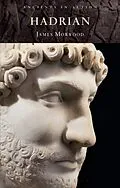
The Roman emperor Hadrian, who lived from 76 to 138 AD was a hugely influential figure whose architectural legacy is obvious even today. However, he was also contradictory and mysterious: he was a Spaniard who became emperor at Rome; he was a popular, successful soldier who aimed to be a man of peace. He dabbled in black magic, and he courted scandal: as well as his bitterly unhappy marriage, he had a very public love affair with Greek boy, who died in mysterious circumstances surrounded by rumours of human sacrifice.This title explores these contradictions and complexities, and pieces together the picture of a man, his life, times and influence. It presents a rounded picture written in a lively and accessible style.
Looking in detail at key themes and topics of Hadrian's life, the title explores his Spanish background, his military service and initiatives of peace, his architectural legacy such as the Pantheon, his villa at Tivoli, his love of Athens and Athenian culture, his relationship with Antinous, and how he dealt with Christians and Jews. In addition to this, the title covers social aspects of life in the Roman empire in the second century: slavery, Roman baths and hygiene, the public spectacles of circus races, gladiatorial fights and animal hunts.
Autorentext
James Morwood was Head of Classics at Harrow School for seventeen years. He then moved to Oxford University and took charge of the language teaching for the Classics Faculty. He retired from this role in 2003. His books include The Oxford Pocket Latin Dictionary (1994, revised edition 2005); A Latin Grammar (1999), Oxford Grammar of Classical Greek (2001), The Plays of Euripides (Bloomsbury, 2002), The Pocket Oxford Dictionary of Classical Greek (2002), Advanced Latin (Bloomsbury, 2009) and The Oxford Latin Course, College edition (2012).
Inhalt
List of Figures
Introduction
Chronology
1. Death on the Nile
2. Growing up in Rome and Spain
3. Starting out
4. War and peace
5. Rebuilding Rome
6. Hadrian's Villa - the sunny pleasure dome and the caves of ice
7. Bread and circuses - keeping the people happy
8. The journeys
9. Hadrian and Athens
10. Antinous
11. Christians and Jews
12. The end
Bibliography
Index