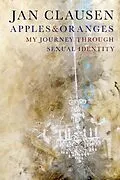
Sexuality and identity are the twin goddesses that lend Jan Clausen's Apples & Oranges its grace and urgency. In the late 1980s, after more than a decade living within a strong Brooklyn lesbian community with her female lover and their daughter, Clausen travels to a war zone in Nicaragua, where she falls in love with a West Indian male lawyer. Her memoir is brimming with intimate physical and emotional details of her personal journey, but perhaps what sets it apart are the deeply informed historical and philosophical lenses through which she examines her own experience. Deeply felt, intensely thoughtful, gorgeously written, Apples & Oranges is a testament to the power and peril of desire. It is also a dazzling examination of the ways in which our search for love and happiness intersect. What does it mean to be straight? What does it mean to be queer? Jan Clausen gives us not one but many answers to these questions.
Autorentext
JAN CLAUSEN is the author of a dozen books in a range of genres, most recently the hybrid poetic text Veiled Spill: A Sequence and the poetry collection If You Like Difficulty. Prose titles include a volume of stories (Mother, Sister, Daughter, Lover) and two novels: Sinking, Stealing and The Prosperine Papers. Clausen's poetry and fiction appear widely in journals and anthologies; she has contributed book reviews and literary journalism to Boston Review, Ms., The Nation, Poets & Writers, and The Women's Review of Books. A proud Brooklyn resident since 1974, she teaches in the Goddard College MFA in Writing Program and at New York University.
Klappentext
Both an intimate memoir and an intellectual musing on sex, gender, and relationships, Apples & Oranges allows writer and academic Jan Clausen to use her own life story as a model for new ways of thinking through sexual categories. Born into a stifling family where neither sex talk nor the slightest profanity was tolerated, Clausen underwent an intellectual and sexual awakening, first at Reed College, and later on the streets of New York City, where she discovered her passions for both the life of the mind and other women. Fast-forward a number of years, and, bored with a life that had become predictable, she moved herself to Nicaragua, where she discovered a newfound freedom -- including the freedom to fall in love with a man.
With unflinching clarity and a willingness to treat her own life as case study, Clausen asks to us to reconsider the inherited scripts and categories that have informed our notions of gender, sex, and intimacy. In discovering a space outside of any pre-conceived identity, she finds and offers us the freedom of true self-determination, the power to explore our own inclinations and desires, unburdened by the expectations of the outer world, uncluttered by the baggage so many of us carry within.
From the Trade Paperback edition.