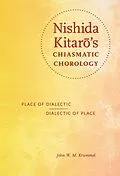
Nishida Kitaro (1870-1945) is considered Japan's first and greatest modern philosopher. As founder of the Kyoto School, he began a rigorous philosophical engagement and dialogue with Western philosophical traditions, especially the work of G. W. F. Hegel. John W. M. Krummel explores the Buddhist roots of Nishida's thought and places him in connection with Hegel and other philosophers of the Continental tradition. Krummel develops notions of self-awareness, will, being, place, the environment, religion, and politics in Nishida's thought and shows how his ethics of humility may best serve us in our complex world.
Autorentext
John W. M. Krummel is Associate Professor of Religious Studies at Hobart and William Smith Colleges.
Zusammenfassung
Nishida Kitar (18701945) is considered Japan's first and greatest modern philosopher. As founder of the Kyoto School, he began a rigorous philosophical engagement and dialogue with Western philosophical traditions, especially the work of G. W. F. Hegel. John W. M. Krummel explores the Buddhist roots of Nishida's thought and places him in connection with Hegel and other philosophers of the Continental tradition. Krummel develops notions of self-awareness, will, being, place, the environment, religion, and politics in Nishida's thought and shows how his ethics of humility may best serve us in our complex world.
Inhalt
Acknowledgments
Introduction
Part I. Preliminary Studies
1. From Aristotle's Substance to Hegel's Concrete Universal: The Development of Nishida's Dialectic
2. Hegelian Dialectics and Mahayana Non-Dualism
Part II. Dialectics in Nishida
3. Pure Experience, Self-Awareness, and Will: Dialectics in the Early Works (From the 1910s to the 1920s)
4. Dialectics in the Epistemology of Place (From the Late 1920s to the Early 1930s)
5. The Dialectic of the World-Matrix (From the 1930s to the 1940s): Acting Persons
6. The Dialectic of the World-Matrix (From the 1930s to the 1940s): The Dialectical Universal and Contradictory Identity
7. The Dialectic of Religiosity (the 1940s)
Part III. Conclusions
8. Nishida and Hegel
9. Nishida, Buddhism, and Religion
10. The Chiasma and the Chora
11. Concluding Thoughts, Criticism and Evaluation
Lexicon
Notes
Bibliography
Index