A NEW YORK TIMES NOTABLE BOOK
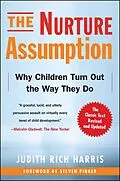
How much credit do parents deserve when their children turn out welt? How much blame when they turn out badly? Judith Rich Harris has a message that will change parents' lives: The "nurture assumption" -- the belief that what makes children turn out the way they do, aside from their genes, is the way their parents bring them up -- is nothing more than a cultural myth. This electrifying book explodes some of our unquestioned beliefs about children and parents and gives us a radically new view of childhood.
Harris looks with a fresh eye at the real lives of real children to show that it is what they experience outside the home, in the company of their peers, that matters most, Parents don't socialize children; children socialize children. With eloquence and humor, Judith Harris explains why parents have little power to determine the sort of people their children will become.
The Nurture Assumption is an important and entertaining work that brings together insights from psychology, sociology, anthropology, primatology, and evolutionary biology to offer a startling new view of who we are and how we got that way.
Autorentext
Judith Rich Harris is the author of No Two Alike: Human Nature and Human Individuality . A former writer of college textbooks, Harris is a recipient of a George A. Miller award, given to the author of an outstanding article in psychology. She is an independent investigator and theoretician whose interests include evolutionary psychology, social psychology, developmental psychology, and behavioral genetics.
Inhalt
CONTENTS
Foreword by Steven Pinker
Preface
1 "Nurture" Is Not the Same as Environment
2 The Nature (and Nurture) of the Evidence
3 Nature, Nurture, and None of the Above
4 Separate Worlds
5 Other Times, Other Places
6 Human Nature
7 Us and Them
8 In the Company of Children
9 The Transmission of Culture
10 Gender Rules
11 Schools of Children
12 Growing Up
13 Dysfunctional Families and Problem Kids
14 What Parents Can Do
15 The Nurture Assumption on Trial
Appendixes
1 Personality and Birth Order
2 Testing Theories of Child Development
Notes
References
Index