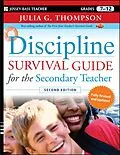
Ideas for creating an orderly classroom where learning can thrive
This unique, hands-on book is packed with tested ideas and strategies to help you create a classroom environment where good conduct and high achievement are the norm and where students become self- motivated and take responsibility for their actions. The second edition is fully revised and updated to reflect changes in the past decade.
* Puts the focus on the teacher as a leader and coach who encourages students to buy into a classroom management approach
* Offers information about setting limits, safety issues, and protecting student's privacy
* Covers topics including technology; disruptions in the classroom form i-pods and cell phones; computers in the classroom; motivating, engaging, instructing students; and communicating with students and parents
This must have resource offers a comprehensive and accessible guide to disciple in the school setting, complete with handy forms, checklists, and self-assessments.
Autorentext
JULIA G. THOMPSON has been a public school teacher for more than twenty-five years. Thompson currently teaches in Fairfax County, Virginia, and is an active speaker, consultant, teacher trainer, and workshop presenter. Author of the best-selling The First-Year Teacher's Survival Guide and The First-Year Teacher's Checklist, she also publishes a Web site (http://juliagthompson.com) offering tips for teachers on a wide variety of topics.
Zusammenfassung
Ideas for creating an orderly classroom where learning can thrive
This unique, hands-on book is packed with tested ideas and strategies to help you create a classroom environment where good conduct and high achievement are the norm and where students become self- motivated and take responsibility for their actions. The second edition is fully revised and updated to reflect changes in the past decade.
- Puts the focus on the teacher as a leader and coach who encourages students to buy into a classroom management approach
- Offers information about setting limits, safety issues, and protecting student's privacy
- Covers topics including technology; disruptions in the classroom form i-pods and cell phones; computers in the classroom; motivating, engaging, instructing students; and communicating with students and parents
This must have resource offers a comprehensive and accessible guide to disciple in the school setting, complete with handy forms, checklists, and self-assessments.
Inhalt
About This Book v
About the Author vi
Acknowledgments vii
Introduction xvii
Section One: Successful Discipline Rests with You 1
You Can Make a Difference 1
Accept Responsibility 2
You are Not Alone 3
Why Punishment and Other Ineffective Discipline Techniques Do Not Work 4
What You Should Know About Adolescents 5
How Much Autonomy Should You Allow? 9
The Behaviors You Can Expect from Your Students 10
Proactive Attitudes That Can Help You Create a Positive Discipline Climate 12
Making Positive Choices 14
Questions for Reflection 14
Section Two: Adopt a Comprehensive Approach for a Successful Discipline Climate 15
Begin the Process with a Broad View 15
The Characteristics of a Well-Managed Twenty-First-Century Classroom 16
Five Commonsense Steps to a Productive Classroom Environment 18
The Most Common Discipline Mistakes That Secondary Teachers Make 18
Effective Management and Discipline Practices 21
Teacher Self-Assessment: How Well-Disciplined is Your Class? 23
Teacher Worksheet: Develop Your Classroom Discipline Plan 24
Teacher Self-Assessment: Think it Through: How Would You Rate Your New Discipline Plan? 27
Put Your High Expectations to Work 28
How to Communicate Your High Expectations 30
Making Positive Choices 30
Questions for Reflection 31
Section Three: Cultivate Your Role as a Classroom Leader 33
Become an Effective Classroom Leader 33
Students Should Come First 34
View Yourself as a Coach 34
The Importance of Assessing Your Performance 35
Teacher Self-Assessment: How Well Do You Convey Your Enthusiasm? 36
Teacher Self-Assessment: Classroom Leadership Self-Assessment 37
How to Gather Other Data on Your Classroom Competence 38
Teacher Self-Assessment: Sample Self-Rating Rubric 39
Teacher Worksheet: Setting Goals for Improving Your Classroom Leadership 40
Avoid Unreasonable Expectations 45
How to Manage Your Stressful Career 45
The Promise of Professionalism 47
How to Be Prepared for Class Every Day 50
How to Make Your Students Pay Attention to You 51
Show Respect to Gain Respect 52
Teacher Self-Assessment: Are You Too Permissive? 54
Teacher Self-Assessment: Determine What You Want Your Students to Say About You 57
Watch Your Body Language 58
Know Your Audience 59
Be Careful About Your Language 61
Making Positive Choices 61
Questions for Reflection 62
Section Four: Foster a Positive Classroom Environment 63
Establish a Positive Classroom Environment 63
Safety Must Come First 64
How to Determine If Students are Stressed Instead of Challenged 66
Student Worksheet: How Stressed are You? 67
Protect Your Students from Bullies 68
Making Your Classroom Safe by Enforcing School Rules 71
Establish a Physical Environment Conducive to Learning 71
Seating Arrangements 75
Sharing Classroom Space 75
Overcrowded Classrooms 76
Dealing with Noise Levels 78
Promoting Classroom Ownership 79
Create a Student-Centered Class Atmosphere 80
Structure Your Class to Use Time Wisely 80
Quick Tips to Make Every Minute Count 80
The First Ten Minutes of Class 81
Reducing Disruptions Through Effective Transitions 83
Activities to Keep Students Engaged in Learning During Transition Times 84
The Last Ten Minutes of Class 86
Making Positive Choices 88
Questions for Reflection 89
Section Five: Promote Self-Discipline 91
Moving Beyond Crowd Control to Promote Self-Discipline 91
Become a Consistent Teacher 93
Teach Students How to Monitor Themselves 94
Student Worksheet: Your Class Goals 96