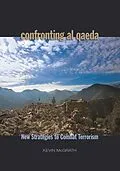
Blending academic objectivity with a clear agenda of devising a new strategic U.S. approach to Al Qaeda, McGrath proposes policy options for confronting terrorism. He asserts that Al Qaeda is primarily a political threat, rather than a military one that challenges the very nature of the U.S. political system and therefore requires a political response. He argues that while coercive means are necessary to reduce Al Qaeda's capacity for violence, a coercive approach alone is insufficient.
The U.S., McGrath contends, must politically undercut Al Qaeda by addressing key political disputes that fuel the US-Al Qaeda conflict in a manner consistent with traditional U.S. foreign policy values. He argues that not only will such an approach weaken Al Qaeda's internal cohesion and politically isolate Al Qaeda from the public that hides and assists it, but it will also stunt terrorism's subversive effects on the American political character.
The U.S., McGrath contends, must politically undercut Al Qaeda by addressing key political disputes that fuel the US-Al Qaeda conflict in a manner consistent with traditional U.S. foreign policy values. He argues that not only will such an approach weaken Al Qaeda's internal cohesion and politically isolate Al Qaeda from the public that hides and assists it, but it will also stunt terrorism's subversive effects on the American political character.
Autorentext
Kevin McGrath is a senior analyst with a global intelligence and risk management firm and lives in Washington. DC. He holds a Ph.D. from the University of Maryland.
Klappentext
Al Qaeda killed over 3,000 US citizens on September 11, 2001, and terrorism leapt to the fore of US strategic and political priorities. Yet, after nearly six years of concentrated effort by the United States, the dominant power in the international system, Al Qaeda survives and is still acknowledged as a potent threat. This begs the question not just of why, but also of what the United States can do to redress the situation. Confronting Al-Qaeda asserts that Al-Qaeda is primarily a political threat, not a military one. This is because terrorists subvert legitimate political processes to achieve political ends. Al-Qaeda challenges not only specific U.S. policy decisions, but also the very nature of the U.S. political system and the U.S.-lead international order created after World War II. Therefore the character of the U.S. political response to the threat from Al-Qaeda is critical. Al-Qaeda's capacity for violence is the direct source of its power. This must be reduced, and coercive means, such as the military, intelligence, and law enforcement, are necessary, for they alone directly degrade Al-Qaeda's potential. A singularly coercive approach, however, is insufficient. As the leader of the international system, the United States is in a position to politically undercut Al-Qaeda. The United States can do so by adhering to globally revered traditional US political values and foreign policy.
Titel
Confronting Al Qaeda
Untertitel
New Strategies to Combat Terrorism
Autor
EAN
9781612510330
Format
E-Book (epub)
Hersteller
Veröffentlichung
15.03.2011
Digitaler Kopierschutz
Adobe-DRM
Dateigrösse
0.68 MB
Anzahl Seiten
336
Unerwartete Verzögerung
Ups, ein Fehler ist aufgetreten. Bitte versuchen Sie es später noch einmal.