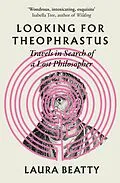
Who is Theophrastus, and why should we care?
Once, he was the equal of Plato and Aristotle. Together he and Aristotle invented science. Alone he invented Botany. The character of the Wife of Bath is his invention, the Canterbury Tales as a whole, perhaps, the product of his inspiration. When Linnaeus was developing our modern system of plant taxonomy, it was Theophrastus' work on plants that he used as a basis. So how could one man do so much and still sink almost without a trace?
This is the story of a journey to find him and bring him back from oblivion. Looking for Theophrastus, in all the places he must have walked and lived, it tells how he and Aristotle, his friend and tutor, broke with the philosophical conventions of the Academy and left on their own adventure; of how together they invented what we now take for granted as the Natural Sciences; how, not content with that, they made the great experiment of applying philosophy directly to the practicalities of government through the tutoring of Alexander the Great; how they were disappointed and how, in the end, they returned to Athens and founded the famous Lyceum.
Against the dramatic context of his time - the end of democracy in Athens and the rise of Alexander the Great; the great battles and vast territorial expansion that followed; the flowering of the philosophy schools on which so much of our culture and thinking is founded - and on, following his cultural legacy through to the modern day, it explores how we perceive, understand and, most importantly, how we relate to the world around us, questioning what we lose from our way of living when we forget those ancients who first taught us how to see.
Autorentext
Laura Beatty
Klappentext
Standing on the deck of a ferry boat, Laura Beatty watches as the assembled port and buildings of mainland Greece disappear from view. Her destination is Lesbos, but she's not only travelling across the stretch of glittering blue sea - she's also travelling 2,000 years into the past, to a time when the world was a wild place of gods and warrior kings. It's here she needs to go to retrieve a forgotten philosopher, one who worked side-by-side with Aristotle to learn and to classify the world, to rely on his senses rather than myth to explain what governs the seasons and the soil, to put down on parchment the glorious multiplicity of character types he met on his travels across ancient Greece.
That philosopher is Theophrastus, a gentle, peaceful, wondering man whose work took him from the academies of Athens to the reckless court of Philip of Macedonia, and in time would would inspire Linnaeus' system of classification and, quite possibly, Chaucer's Canterbury Tales - and the modern form of the novel that the Tales, in turn inspired. But if one person achieved so much, why is his name so little recognised? In Looking for Theophrastus, Laura Beatty restores this important figure to collective consciousness, and in doing so travels in Theophrastus's own footsteps, exploring how we see, receive and relate to the world around us and questioning what we lose from the modern way of living when we forget those ancients who first taught us how to see.