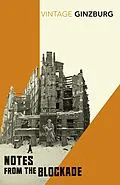
The 900-day siege of Leningrad (1941-44) was one of the turning points of the Second World War. It slowed down the German advance into Russia and became a national symbol of survival and resistance. An estimated one million civilians died, most of them from cold and starvation. Lydia Ginzburg, a respected literary scholar (who meanwhile wrote prose 'for the desk drawer' through seven decades of Soviet rule), survived. Using her own using notes and sketches she wrote during the siege, along with conversations and impressions collected over the years, she distilled the collective experience of life under siege. Through painful depiction of the harrowing conditions of that period, Ginzburg created a paean to the dignity, vitality and resilience of the human spirit.
This original translation by Alan Myers has been revised and annotated by Emily van Buskirk. This edition includes 'A Story of Pity and Cruelty', a recently discovered documentary narrative translated into English for the first time by Angela Livingstone.
Vorwort
An incredible story of struggle and survival during the siege of Leningrad during the Second World War
Autorentext
Lydia Yakovlevna Ginzburg was born in Odessa in 1902, and moved to Leningrad in 1922, where she studied at the famous Institute for Art History as a student and later as a colleague of Victor Shklovsky, Yury Tynianov and Boris Eikhenbaum, the major figures of Russian Formalism. She survived the purges, the 900-day siege of Leningrad and the anti-Semitic campaigns that followed the war to become, in the 1960s-'80s, a friend and inspiration to a younger generation of Petersburg literary scholars and poets, including Alexander Kushner and Elena Shvarts. She was a prominent cultural figure in the years of perestroika, when she began to publish notes and essays that she been writing for the 'desk drawer' starting in the 1920s. Her books include venerated works of literary scholarship such as On Lyric Poetry, On Psychological Prose (published in the English translation from Princeton University Press) and On the Literary Hero. The collection of her prose that appeared in her lifetime, Person at a Writing Table (1989), and which contained Notes from the Blockade, as well as posthumous editions, have established Ginzburg as innovative author of what she called 'in-between' genres - notes, essays, and fragmentary narratives - that describe and analyse the human experience of a historically catastrophic era spanning much of the twentieth century. Lydia Ginzburg died in 1990.
Klappentext
"Tells more of the experience of life in twentieth-century Russia than many multi-volume novels" Aleksandr Kushner
The 900-day siege of Leningrad (1941-44) was one of the turning points of the Second World War. It slowed down the German advance into Russia and became a national symbol of survival and resistance. From her own experience as a survivor of the blockade and using facts, conversations, and impressions collected over many years, Lidiya Ginzburg has created a remarkable everyman hero in whom she distils the collective experience of life under siege. Though the author may depict, often painfully, the hunger and harrowing conditions of that period, the reader takes away a different impression: the dignity, vitality and intellectual resilience of the thinking mind as it records and makes sense of extreme experience. This first translation of a classic work of "documentary fiction", reminiscent of the novels of Primo Levi and the philosophical narratives of Albert Camus, introduces a major twentieth-century Russian writer to English-language readers.
Lidiya Ginzbury (1902-90) was often at odds with the Soviet literary establishment, and much of her writing had to be confined to the "desk drawer". She survived the purges, the blockade and the anti-Semitic years of the '50s to become a friend and inspiration to the postwar generation of Petersburg poets, including Joseph Brodsky and Aleksandr Kushner. Eventually, in the '60s and '70s she was able to publish her literary criticism and theory, but it was not until 1984 that Ginzbury published Blockade Diary in the journal Neva.