Magnus J. Wenninger
Klappentext
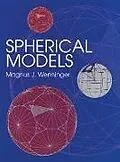
Employing only the most elementary mathematical principles, the text initially provides complete instructions for making spherical models from five regular solids, using only circular bands of paper, a ruler and a compass. Also discussed is tessellation, or tiling, on a sphere and how to make spherical models of all the semiregular solids. The volume concludes with a discussion of the relationship of polyhedral to geodesic domes and directions for building models of the domes.
Abundantly illustrated with photographs, drawings, and computer graphics of attractive geometrical models, this volume will appeal to a wide range of readers?from students and teachers of mathematics, art, design, architecture and engineering, to recreational mathematics enthusiasts and builders of geodesic domes.
Inhalt
Foreword by Arthur L. Loeb
Preface
Introduction: Basic properties of the sphere
I. The regular spherical models
The spherical hexahedron or cube
General instructions for making models
The spherical octahedron
The spherical tetrahedron
The spherical icosahedron and dodecahedron
The polyhedral kaleidoscope
Summary
II. The semiregular spherical models
The spherical cuboctahedron
The spherical icosidodecahedron
Spherical triangles as characteristic triangles
The five truncated regular spherical models
The rhombic spherical models
The rhombitruncated spherical models
The snub forms as a spherical models
The spherical duals
Summary
III. Variations
Regular and semiregular variations
Star-faced spherical models
IV. Geodesic domes
The simplest geodesic domes
Geodesic domes derived from the icosahedron
General instructions for making geodesic models
An alternative method of approaching geodesic segmentation
Introduction to geodesic symbolism and classification
Geodesic models derived from the dodecahedron
An alternative for geodesic segmentation of the dodecahedron
A second alternative for geodesic segmentation of the icosahedron
An alternative for geodesic segmentation of the snub dodecahedron
A third alternative for geodesic segmentation of the icosahedron
Final comments
V. Miscellaneous models
"Honeycomb models, edge models, and nolids"
An introduction to the notion of polyhedral density
Edge models of stellated forms
Some final comments about geodesic domes
Epilogue
Appendix
References
List of models