Praise for the first edition
"clear and informative" Chemistry World
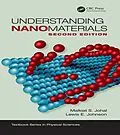
The authors provide the perfect training tool for the workforce in nanotech development by presenting the fundamental principles that govern the fabrication, characterization, and application of nanomaterials. This edition represents a complete overhaul, giving a much more complete, self-contained introduction. As before, the text avoids excessive mathematical detail and is written in an easy to follow, appealing style suitable for anyone, regardless of background in physics, chemistry, engineering, or biology. The organization has been revised to include fundamental physical chemistry and physics pertaining to relevant electrical, mechanical, and optical material properties.
- Incorporates new and expanded content on hard materials, semiconductors for nanoelectronics, and nonlinear optical materials.
- Adds many more worked examples and end-of-chapter problems.
- Provides more complete coverage of fundamentals including relevant aspects of thermodynamics, kinetics, quantum mechanics, and solid-state physics, and also significantly expands treatment of solid-phase systems.
Malkiat S. Johal is a professor of physical chemistry at Pomona College, and earned his doctorate in physical chemistry at the University of Cambridge, UK.
Lewis E. Johnson is a research scientist at the University of Washington, where he also earned his doctorate in chemistry and nanotechnology.
Autorentext
Malkiat S. Johal is a professor of Physical Chemistry at Pomona College. He obtained a first class honors degree in chemistry from the University of Warwick, UK. His research laboratory at Pomona College focuses on using self-assembly and ionic adsorption processes to fabricate nanomaterials for optical and biochemical applications. He also explores fundamental phenomena such as ion-pair complexation, adsorption, surface wettability, and intermolecular non-covalent interactions in materials at interfaces. He has published more than eighty research papers, mostly co-authored by his undergraduate research students. He teaches courses in physical chemistry, general chemistry and soft nanomaterials.
Lewis E. Johnson is a research scientist at the University of Washington. He earned his Ph.D. in Chemistry and Nanotechnology from the University of Washington under the guidance of Professor Bruce Robinson. He has taught at Pomona College (his undergraduate alma mater) as a postdoctoral lecturer and worked as postdoctoral research associate at Pacific Northwest National Laboratory, where he conducted research on glass formation in calcium aluminate electride semiconductors with Dr. Peter Sushko and on allosteric modulation of electron transfer in nitrogenase with Dr. Simone Raugei. His current research involves designing and characterizing new nonlinear optical dyes and modeling the formation and structure of complex non-crystalline materials, among other projects.
Klappentext
Praise for the first edition
"clear and informative" Chemistry World
The authors provide the perfect training tool for the workforce in nanotech development by presenting the fundamental principles that govern the fabrication, characterization, and application of nanomaterials. This edition represents a complete overhaul, giving a much more complete, self-contained introduction. As before, the text avoids excessive mathematical detail and is written in an easy to follow, appealing style suitable for anyone, regardless of background in physics, chemistry, engineering, or biology. The organization has been revised to include fundamental physical chemistry and physics pertaining to relevant electrical, mechanical, and optical material properties.
- Incorporates new and expanded content on hard materials, semiconductors for nanoelectronics, and nonlinear optical materials.
- Adds many more worked examples and end-of-chapter problems.
- Provides more complete coverage of fundamentals including relevant aspects of thermodynamics, kinetics, quantum mechanics, and solid-state physics, and also significantly expands treatment of solid-phase systems.
Malkiat S. Johal is a professor of physical chemistry at Pomona College, and earned his doctorate in physical chemistry at the University of Cambridge, UK.
Lewis E. Johnson is a research scientist at the University of Washington, where he also earned his doctorate in chemistry and nanotechnology.
Zusammenfassung
Praise for the first edition"e;clear and informative"e; Chemistry WorldThe authors provide the perfect training tool for the workforce in nanotech development by presenting the fundamental principles that govern the fabrication, characterization, and application of nanomaterials. This edition represents a complete overhaul, giving a much more complete, self-contained introduction. As before, the text avoids excessive mathematical detail and is written in an easy to follow, appealing style suitable for anyone, regardless of background in physics, chemistry, engineering, or biology. The organization has been revised to include fundamental physical chemistry and physics pertaining to relevant electrical, mechanical, and optical material properties.Incorporates new and expanded content on hard materials, semiconductors for nanoelectronics, and nonlinear optical materials.Adds many more worked examples and end-of-chapter problems.Provides more complete coverage of fundamentals including relevant aspects of thermodynamics, kinetics, quantum mechanics, and solid-state physics, and also significantly expands treatment of solid-phase systems.Malkiat S. Johal is a professor of physical chemistry at Pomona College, and earned his doctorate in physical chemistry at the University of Cambridge, UK.Lewis E. Johnson is a research scientist at the University of Washington, where he also earned his doctorate in chemistry and nanotechnology.
Inhalt
1. A Brief Introduction to Nanoscience
2. Thermodynamics and Nanoscience
3. Kinetics and Transport in Nanoscience
4. Quantum Effects at the Nanoscale5. Intermolecular Interactions and Self-Assembly
6. Bulk Characterization Techniques for Nanomaterials
7. Fundamentals of Surface Nanoscience
8. Surface Characterization and Imaging Methods
9. Introduction to Functional Nanomaterials
10. Fabrication, Properties, and Applications of Thin Films
Glossary