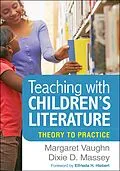
K-8 classroom teachers, literacy specialists/coaches, and staff developers; teacher educators and students. Will serve as a supplemental text in such courses as Children's Literature, Reading/Literacy Methods, and Curriculum and Instruction.
Autorentext
Margaret Vaughn, PhD, is Associate Professor of Literacy in the College of Education at Washington State University. A former first-grade teacher, she conducts research on adaptive and equitable practices to support student agency and literacy learning. Dr. Vaughn is coeditor of Principles of Effective Literacy Instruction, Grades K-5, and coauthor of Teaching with Children's Literature: Theory to Practice. Her work has appeared in many journals of literacy research and practice.
Dixie D. Massey, PhD, is a lecturer at Seattle Pacific University, where she teaches courses in literacy development and teacher preparation. Dr. Massey is coauthor of several curriculum books and series. She has published her research in leading journals of literacy research and practice.
Klappentext
Perhaps no factor has a greater influence on children's literacy learning than exposure to engaging, authentic, culturally relevant texts. This concise practitioner resource and course text helps K-8 teachers make informed choices about using children's literature in their classrooms, from selecting high-quality texts to planning instruction and promoting independent reading. The authors present relevant theories (such as reader response and culturally responsive pedagogy) and show how to apply them in practice. Key topics include teaching narrative and expository texts, tapping into students' individual interests, and conducting text-based writing activities and discussions. Every chapter features case examples, reflection questions, and learning activities for teachers; appendices list exemplary children's literature.
Inhalt
Foreword, Elfrieda H. Hiebert
1. Introduction: Beliefs about Children's Literature
2. What Is Purposeful Teaching with Literature?
3. What Matters When Teaching with Literature in the Classroom?
4. What Do Books Have to Offer?
5. How Can We Help Students Understand the Books They Read?
6. How Can We Encourage Students to Read Widely?
7. How Can We Incorporate Expository Text Purposefully?
8. How Can We Use Writing and Discussing to Make Sense of Reading?
9. How Can We Encourage Reading Beyond the Classroom?
10. How Do We Put It All Together?
Appendix A. Books to Support Student Agency
Appendix B. Books to Talk about Visioning with Students
Appendix C. Books by Genre
Appendix D. Book Awards
Appendix E. Popular Series Books
Appendix F. Book Club Choices
Appendix G. Children's and Teen Choice Awards
References
Children's Literature
Children's Literature by Appendix
Index