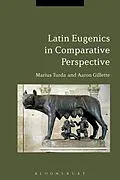
Latin eugenics was a scientific, cultural and political programme designed to biologically empower modern European and American nations once commonly described as 'Latin', sharing genealogical, linguistic, religious, and cultural origins.
Latin Eugenics in Comparative Perspective offers a comparative, nuanced approach to eugenics as a scientific programme as well as a cultural and political phenomenon. It examines the commonalities of eugenics in 'Latin' Europe and Latin America. As a program to achieve the social and political goals of modern welfare systems, Latin eugenics strongly influenced the complex relationship of the state to the individual. Drawing on a wide range of primary and secondary sources in many languages, this book offers the first history of Latin eugenics in Europe and the Americas.
Autorentext
Marius Turda is Reader in 20th Century Central and Eastern European Biomedicine in the Department of History at Oxford Brookes University, UK.
Aaron Gillette is an Associate Professor of Modern European History at the University of Houston-Downtown, USA.
Inhalt
Introduction
1. Precursors
2. Early Latin Eugenics
3. Latin Eugenics in Interwar Europe
4. Latin Eugenics, Catholicism and Sterilization
5. Eugenics in Interwar Latin America
6. The Latin Eugenics Federation
7. Latin Eugenics and Scientific Racism
Conclusion
Epilogue: Latin Eugenics after 1945
Bibliography
Index