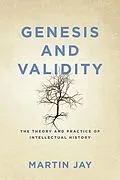
There is no more contentious and perennial issue in the history of modern Western thought than the vexed relationship between the genesis of an idea and its claim to validity beyond it. Can ideas or values transcend their temporal origins and overcome the sin of their original context, and in so doing earn abiding respect for their intrinsic merit? Or do they inevitably reflect them in ways that undermine their universal aspirations? Are discrete contexts so incommensurable and unique that the smooth passage of ideas from one to the other is impossible? Are we always trapped by the limits of our own cultural standpoints and partial perspectives, or can we somehow escape their constraints and enter into a fruitful dialogue with others? These persistent questions are at the heart of the discipline known as intellectual history, which deals not only with ideas, but also with the men and women who generate, disseminate, and criticize them. The essays in this collection, by one of the most recognized figures in the field, address them through engagement with leading intellectual historians-Hans Blumenberg, Quentin Skinner, Hayden White, Isaiah Berlin, Frank Ankersmit-as well other giants of modern thought-Max Weber, Emile Durkheim, Georg Simmel, Walter Benjamin, Theodor Adorno, and Georg Lukács. They touch on a wide variety of related topics, ranging from the heroism of modern life to the ability of photographs to lie. In addition, they explore the fraught connections between philosophy and theory, the truth of history and the truthfulness of historians, and the weaponization of free speech for other purposes.
Autorentext
Martin Jay is Ehrman Professor of European History Emeritus at University of California, Berkeley. He is author of numerous books, including The Dialectical Imagination: A History of the Frankfurt School and the Institute of Social Research, 1923-50 and Reason After Its Eclipse: On Late Critical Theory.
Inhalt
Introduction
Chapter 1. Impudent Claims and Loathsome Questions: Intellectual History as Judgment of the Past Chapter 2. Historical Explanation and the Event: Reflections on the Limits of Contextualization Chapter 3. Intention and Irony: The Missed Encounter Between Hayden White and Quentin Skinner Chapter 4. Walter Benjamin and Isaiah Berlin: Modes of Jewish Intellectual Life in the Twentieth Century Chapter 5. Against Rigor: Hans Blumenberg on Freud and Arendt Chapter 6. "Hey! What's the Big Idea?": Ruminations on the Question of Scale in Intellectual History Chapter 7. Fidelity to the Event? Lukács's History and Class Consciousness and the Russian Revolution Chapter 8. Can Photographs Lie? Reflections on a Perennial Anxiety Chapter 9. Sublime Historical Experience, Real Presence, and Photography Chapter 10. The Heroism of Modern Life and the Sociology of Modernization: Durkheim, Weber, and Simmel Chapter 11. Historical Truth and the Truthfulness of Historians Chapter 12. Theory and Philosophy: Antonyms in Our Semantic Field? Chapter 13. The Weaponization of Free Speech
Notes Index Acknowledgments