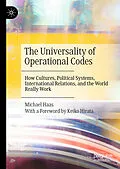
The book asserts that every individual and government operates according to an "operational code"-a set of guiding principles that shape decisions and actions, often invisible yet profoundly influential. Operational codes, rooted in culture, diplomacy, and politics can foster cooperation or ignite conflict when they collide. From the origins of the concept in Cold War foreign policy analysis to its application across cultural, governmental, and global norms, this book offers the first comprehensive analysis of operational codes at multiple levels of analysis. Drawing on interdisciplinary insights, explanations are provided about how operational codes underpin attitudes and behavior in communities, democracies, regional alliances, global power structures, and even in the prosecution of war criminals. By revealing the logic behind social interaction and statecraft, this work equips scholars and practitioners to better understand-and anticipate-the dynamics of peace and conflict in an increasingly fragile world.
Autorentext
Michael Haas, with a M.A. degree from Yale University and a doctorate from Stanford University, has taught political science at Northwestern University, Purdue University, the University of London, Loyola Marymount University, the University of California (Riverside), five campuses of California State University, and is now retired after more than 30 years at the University of Hawai i. He has authored or edited 68 books on international studies and politics, include his recent Professionalization of Foreign Policy and Beyond Polarized American Democracy. Recognized for his work on human rights and advocacy against racism and foreign policy missteps, he was nominated for the Nobel Peace Prize in 2010.