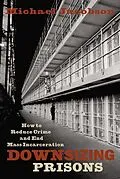
A convincing argument that mass incarceration neither reduces crime nor ensures safety
Over two million people are incarcerated in America's prisons and jails, eight times as many since 1975. Mandatory minimum sentencing, parole agencies intent on sending people back to prison, three-strike laws, for-profit prisons, and other changes in the legal system have contributed to this spectacular rise of the general prison population.
After overseeing the largest city jail system in the country, Michael Jacobson knows first-hand the inner workings of the corrections system. In Downsizing Prisons, he convincingly argues that mass incarceration will not, as many have claimed, reduce crime nor create more public safety. Simply put, throwing away the key is not the answer.
Autorentext
Michael Jacobson has over twenty years of government service. He was formerly the commissioner of the New York City Departments of Correction and Probation and a deputy budget director for the City of New York, serving in the Koch, Dinkins, and Giuliani administrations. He is currently the Executive Director of the Vera Institute of Justice.
Inhalt