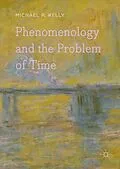
This book explores the problem of time and immanence for phenomenology in the work of Edmund Husserl, Martin Heidegger, Maurice Merleau-Ponty, and Jacques Derrida. It provides an in-depth analysis of phenomenology's central notions of intentionality, immanence, and temporality, suggesting a new perspective on themes central to phenomenology and its development as a movement.
The author raises for debate the question of where phenomenology begins and ends. Detailed readings of immanence in light of the more familiar problems of time-consciousness and temporality provide the framework for evaluating both Husserl's efforts to break free of modern philosophy's notions of immanence, and the influence Hiedegger's criticism of Husserl exercised over Merleau-Ponty's and Derrida's alternatives to Husserl's phenomenology.
Autorentext
Michael R. Kelly is Assistant Professor of Philosophy at The University of San Diego, USA. He is editor of Bergson and Phenomenology (2010), and has published articles on the topic of time and time-consciousness in the Journal of the British Society for Phenomenology and American Catholic Philosophical Quarterly.
Zusammenfassung
This book explores the problem of time and immanence for phenomenology in the work of Edmund Husserl, Martin Heidegger, Maurice Merleau-Ponty, and Jacques Derrida. Detailed readings of immanence in light of the more familiar problems of time-consciousness and temporality provide the framework for evaluating both Husserl's efforts to break free of modern philosophy's notions of immanence, and the influence Heidegger's criticism of Husserl exercised over Merleau-Ponty's and Derrida's alternatives to Husserl's phenomenology. Ultimately exploring various notions of intentionality, these in-depth analyses of immanence and temporality suggest a new perspective on themes central to phenomenology's development as a movement and raise for debate the question of where phenomenology begins and ends.
Inhalt
Preface.- Introduction: New Beginnings.- Part I: Phenomenology and the Problem of Time.- 1. Time, Intentionality, and Immanence in Modern Subject Idealism.- 2. The Imperfection of Immanence in Husserl's Phenomenology.- 3. The Living-Present: Absolute time-consciousness and Genuine Phenomenological Immanence.- Part II: The Problem of Time and Phenomenology. - 4. Transcendence: Heidegger and The Turn, the open, 'The finitude of being first spoken of in the book on Kant'.- 5. The Truly Transcendental: Merleau-Ponty,un Écart, 'The Acceptance of the Truth of the Transcendental Analysis'.- Conclusion: The Ultratranscendental: Derrida and Phenomenology 'Tormented, if not contested, from within'.