'Intriguing' - The Sunday Times
'A rousing read' - The Irish Times
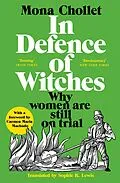
Renowned journalist Mona Chollet recasts the witch as a powerful role model: an emblem of strength, free to exist beyond the narrow limits society imposes on women.
Taking three archetypes from historic witch hunts - independent women, women who avoid having children and women who embrace ageing - Chollet examines how women today have the same charges levelled against them. She calls for justice in healthcare, challenging the gender imbalance in science and questioning why female bodies are still controlled by men.
Rich with popular culture, literary references and media insights, In Defence of Witches is a vital addition to the cultural conversation around women, witches and the misogyny that has shaped the world they live in.
With a foreword by Carmen Maria Machado and translated from French by Sophie R. Lewis.
'Thought-provoking . . . a bright light of Francophone feminism' - The New York Times
Autorentext
Mona Chollet
Klappentext
'A thought-provoking, discursive survey by Mona Chollet, a bright light of Francophone feminism' The New York Times
'Rousing . . . a very interesting take on contemporary feminist politics' Irish Times
A source of terror, a misogynistic image of woman inherited from the trials and the pyres of the great early modern witch hunts - in In Defence of Witches the witch is recast as a powerful role model to women today: an emblem of power, free to exist beyond the narrow limits society imposes on women.
Whether selling grimoires on Etsy, posting photos of their crystal-adorned altar on Instagram, or gathering to cast spells on Donald Trump, witches are everywhere. But who exactly were the forebears of these modern witches? Who was historically accused of witchcraft, often meeting violent ends? What types of women have been censored, eliminated, repressed, over the centuries?
Mona Chollet takes three archetypes from historic witch hunts, and examines how far women today have the same charges levelled against them: independent women; women who choose not to have children; and women who reject the idea that to age is a terrible thing. Finally, Chollet argues that by considering the lives of those who dared to live differently, we can learn more about the richness of roles available, just how many different things a woman can choose to be.
Translated from the French by Sophie R Lewis.