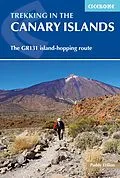
Experience the ultimate island-hopping adventure on the celebrated GR131, a 560km (348 mile) long-distance trail traversing the dramatic volcanic landscapes of the Canary Islands. Linking Lanzarote, Fuerteventura, Gran Canaria, Tenerife, La Gomera, La Palma, and El Hierro, this epic month-long trek reveals the archipelago's wild scenery, from lava fields to cloud forests. For those seeking shorter escapes, the GR131 can be tackled in sections or on individual islands, with flexible itineraries to suit every trekker's ambitions.
Ideal for walkers with a taste for discovery and remote adventure, this comprehensive Cicerone guide describes the GR131 in 32 graded stages (7?30km each), beginning at Órzola on Lanzarote and culminating at the legendary 'edge of the world', the remote Embarcadero de Orchilla on El Hierro. An optional ascent of El Teide, Spain's highest peak, offers an unforgettable highlight on Tenerife.
- Follow the GR131 route across the Canary Islands along quiet roads, historic mule tracks, and waymarked paths, linking traditional villages and vibrant towns, while scaling the highest ground on each island.
- Plan your Canary Islands trek for the ideal season, with guidance on local weather and trail conditions showing why March to May is best for wildflowers and comfortable walking temperatures.
- Benefit from clear stage gradings and descriptions, reliable waymarking, and daily information boxes that cover start and finish points, distances, walking times, elevation changes, terrain, and available facilities along the GR131 in the Canary Islands.
- Find practical advice on accommodation throughout the Canary Islands, from village pensiones and rural guesthouses to refuges and hotels, plus comprehensive notes on services, shops, bar-restaurants, water sources, and public transport for every stage. The guide also includes information on ferry transfers and local buses for seamless logistics between the islands.
- Navigate the GR131 across the Canary Islands with confidence using clear 1:50,000 mapping, downloadable GPX files, and step-by-step route descriptions provided for each stage.
- Expand your knowledge of the Canary Islands with sections on geology, history, flora and fauna, travel, language, money, food, and the unique culture of the archipelago.
Plan your island-hopping trek with confidence using the definitive Cicerone guidebook, and immerse yourself in the striking natural beauty, history, and diversity of the Canary Islands' GR131, Europe's trail to the edge of the world.
Autorentext
Paddy Dillon is a prolific walker and guidebook writer, with 100 guidebooks to his name and contributions to 40 other titles. He has written for several outdoor magazines and other publications and has appeared on radio and television. Paddy uses a tablet computer to write as he walks. His descriptions are therefore precise, having been written at the very point at which the reader uses them. Paddy is an indefatigable long-distance walker who has walked all of Britain's National Trails and several European trails. He has also walked in Nepal, Tibet, Korea and the Rocky Mountains of Canada and the US. Paddy is a member of the Outdoor Writers and Photographers Guild and President of the Backpackers Club. www.paddydillon.co.uk
Klappentext
This guidebook provides a comprehensive and detailed description of the GR131, an island-hopping trail across the seven Canary Islands. The 560km (348 mile) route begins on Lanzarote and finishes on El Hierro and is presented in 32 daily stages. The route is well waymarked but some navigational skills are required, and the remote and occasional rocky sections need to be treated with care. Also included is an optional ascent of El Teide, the highest peak on Spanish territory at 3718m. The guide is split into seven parts, one for each island. Overview statistics, detailed navigational description and 1:50,000 mapping is provided for each stage and the guide also includes key information about transport to and between the Canary Islands and availability of accommodation and services. There is background information on the geology, history, plants and wildlife and notes on local points of interest. An appendix contains a helpful glossary. As a geologically young area, the Canaries boast rare wildlife across their dramatic volcanic terrain. The islands contain a number of national parks, and the landscape varies from semi-desert to forests and barren mountainsides. This month-long route is a great opportunity for walkers to fully immerse themselves in the diverse culture and scenery of the Canary Islands.
Inhalt
Map key Overview map of the Canary Islands Route summary table Introduction Location Geology Brief history of the Canary Islands Plants and animals Travel to the Canary Islands Travel around the Canary Islands When to go Accommodation Language Money Food and drink Trekking the GR131 Using this guide Emergencies Lanzarote Stage 1 rzola to Hara Stage 2 Hara to Teguise Stage 3 Teguise to Montaa Blanca Stage 4 Montaa Blanca to Yaiza Stage 5 Yaiza to Playa Blanca Fuerteventura Stage 6 Islote de Lobos Stage 7 Corralejo to La Oliva Stage 8 La Oliva to Tefa Stage 9 Tefa to Betancuria Stage 10 Betancuria to Pájara Stage 11 Pájara to La Pared Stage 12 La Pared to Barranco de Pecenescal Stage 13 Barranco de Pecenescal to Morro Jable Stage 14 Morro Jable to Faro de Janda Gran Canaria Stage 15 Faro de Maspalomas to Ayagaures Stage 16 Ayagaures to Tunte Stage 17 Tunte to Cruz de Tejeda Stage 18 Cruz de Tejeda to Tamadaba Stage 19 Tamadaba to Puerto de las Nieves Tenerife Stage 20 La Esperanza to La Caldera Stage 21 La Caldera to El Portillo Optional route Ascent of El Teide Stage 22 El Portillo to Parador Stage 23 Parador to Vilaflor Stage 24 Vilaflor to Arona La Gomera Stage 25 San Sebastián to Chipude Stage 26 Chipude to Playa de Vallehermoso La Palma Stage 27 Faro de Fuencaliente to Fuencaliente Stage 28 Fuencaliente to Refugio El Pilar Stage 29 Refugio El Pilar to Roque de los Muchachos Stage 30 Roque de los Muchachos to Puerto de Tazacorte El Hierro Stage 31 Puerto de la Estaca or Tamaduste to Fuente de La Llana Stage 32 Fuente de La Llana to Embarcadero de Orchilla Appendix A Language notes Appendix B Useful contacts