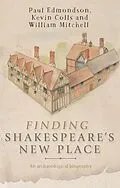
This ground-breaking book provides an abundance of fresh insights into Shakespeare's life in relation to his lost family home, New Place. The findings of a major archaeological excavation encourage us to think again about what New Place meant to Shakespeare and, in so doing, challenge some of the long-held assumptions of Shakespearian biography. New Place was the largest house in the borough and the only one with a courtyard. Shakespeare was only ever an intermittent lodger in London. His impressive home gave Shakespeare significant social status and was crucial to his relationship with Stratford-upon-Avon. Archaeology helps to inform biography in this innovative and refreshing study which presents an overview of the site from prehistoric times through to a richly nuanced reconstruction of New Place when Shakespeare and his family lived there, and beyond. This attractively illustrated book is for anyone with a passion for archaeology or Shakespeare.
Autorentext
Paul Edmondson is Head of Research at The Shakespeare Birthplace Trust Kevin Colls is Archaeological Project Manager at the Centre of Archaeology, Staffordshire University William Mitchell is Project Archaeologist at the Centre of Archaeology, Staffordshire University
Inhalt
Foreword - Michael WoodIntroduction - Paul Edmondson, Kevin Colls and William Mitchell1. Ancient beginnings: the site of New Place from the prehistoric to the early medieval period - William Mitchell and Kevin Colls 2. The origins of New Place: Hugh Clopton's 'grete house' of c.1483 - William Mitchell and Kevin Colls 3. Shakespeare and Stratford-upon-Avon 1564-1596 - Paul Edmondson4. Shakespeare and New Place 1597-1616 and later occupants to 1677 - Paul Edmondson5. A reconstruction of Shakespeare's New Place - Kevin Colls, William Mitchell and Paul Edmondson6. After Shakespeare: New Place from 1677 to 1759 - Kevin Colls and William Mitchell7. The archaeologies of New Place - Kevin Colls and William MitchellClosing remarks - Paul Edmondson, Kevin Colls and William MitchellGlossary - William Mitchell and Kevin CollsThe Dig for Shakespeare Academic Advisory BoardDig for Shakespeare VolunteersIndex