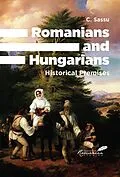
Romanians and Hungarians have been linked throughout history since the Middle Ages. Both peoples have bravely fought to defend Christianity against Islamic terror, oftentimes shoulder to shoulder. Despite their close ties, controversies have often arisen leading to conflicts at various times throughout history, most recently at the beginning of World War II, when through the Diktat of Vienna, Hitler and Mussolini awarded large portions of Romanian territory to Hungary. In Romanians and Hungarians: Historical Premises, which was originally published during those tumultuous times, historian C. Sassu discusses the historical premises of Romanian-Hungarian relations and tries to explain, as lucidly as possible, the real value of the affirmations made, in the hope that minds unbiased by passion and not narrowed by self-interest will find it useful and opportune to understand the true elements of this controversy. Romanians and Hungarians: Historical Premises provides valuable insight for anyone seeking to understand the historical background of Romanian-Hungarian relations. The book includes illustrations and several useful maps that help the reader understand the issues presented.
Autorentext
Liviu Rebeanu (1885-1944) was one of Romania's most distinguished literary figures. His novel Ion is considered the first modern Romanian novel. Liviu Rebeanu (1885-1944) was one of Romania's most distinguished literary figures. His novel Ion is considered the first modern Romanian novel. Liviu Rebeanu (1885-1944) was one of Romania's most distinguished literary figures. His novel Ion is considered the first modern Romanian novel. Liviu Rebeanu (1885-1944) was one of Romania's most distinguished literary figures. His novel Ion is considered the first modern Romanian novel.
Dr. A.K. Brackob is a noted specialist in the history of southeastern Europe. His other books include Scanderbeg: A History of George Castriota and the Albanian Resistance to Islamic Expansion in Fifteenth Century Europe.