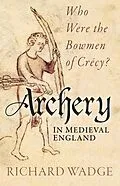
Archery in Medieval England is an account of how archery developed amongst ordinary people in England and Wales after the Norman Conquest. In the 300 years after that traumatic event, Englishmen became such skilled archers that they could defeat the most heavily armoured noble knights in battle after battle - feats of arms unequalled by the combatants of any other European country. Here Richard Wadge describes how men used bows and arrows in their everyday lives in the centuries between the arrival of the Normans and the start of the 100 Years War in Edward III's reign.
Many contemporary records provide accounts of the illegal use of bows and arrows: unlawful hunting is shown to have been particularly important as a school for the development of battle- winning archery skills. In the process of investigating these accounts, light is shed on the background to the stories of Robin Hood and other outlaws. Evidence from archaeology, manuscript illustrations, church wall paintings and carvings provides an insight into the actual bows and arrows and their use.
Richard Wadge shows how the archer came to symbolise the spirit of the ordinary Englishman, how he became a forerunner of John Bull and how he remains part of the national identity even today.
Autorentext
RICHARD WADGE is an organiser of the European Traditional Archery Society shoot in England. He is the author or the best-selling Arrowstorm: the World of the Archer in the Hundred Years War for Spellmount. He provided Historical Appendices in P Bickerstaffe's Medieval War Bows: a Bowyer's Thoughts. He wrote 'Medieval Arrowheads from Oxfordshire' for the journal Oxoniensia (a peer-reviewed journal) and 'The Longbowmen of the Vijayanagaran Empire' for the Journal of the Society of Archer Antiquaries, amongst other articles. He lives in Oxford.
Klappentext
How was it that ordinary men in medieval England and Wales became such skilled archers that they defeated noble knights in battle after battle? The archer in medieval England became a forerunner of John Bull as a symbol of the spirit of the ordinary Englishman. He had his own popular literature that left us a romantic version of the lives and activities of outlaws and poachers such as Robin Hood. This remarkable development began 150 years after the traumatic events of the Norman Conquest transformed the English way of life, in ways that were almost never to the benefit of the English. This book is the first account of the way ordinary men used bows and arrows in their day-to-day lives, and the way that their skills became recognised by the kings of England as invaluable in warfare.
Zusammenfassung
Archery in Medieval England is an account of how archery developed amongst ordinary people in England and Wales after the Norman Conquest. In the 300 years after that traumatic event, Englishmen became such skilled archers that they could defeat the most heavily armoured noble knights in battle after battle feats of arms unequalled by the combatants of any other European country. Here Richard Wadge describes how men used bows and arrows in their everyday lives in the centuries between the arrival of the Normans and the start of the 100 Years War in Edward III's reign. Many contemporary records provide accounts of the illegal use of bows and arrows: unlawful hunting is shown to have been particularly important as a school for the development of battle- winning archery skills. In the process of investigating these accounts, light is shed on the background to the stories of Robin Hood and other outlaws. Evidence from archaeology, manuscript illustrations, church wall paintings and carvings provides an insight into the actual bows and arrows and their use. Richard Wadge shows how the archer came to symbolise the spirit of the ordinary Englishman, how he became a forerunner of John Bull and how he remains part of the national identity even today.