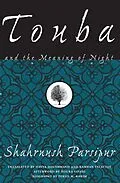
An Iranian woman forges her own path through life in this "stylishly original contribution to modern feminist literature" ( Publishers Weekly).
After her father's death, fourteen-year-old Touba takes her family's financial security into her own hands by proposing to a fifty-two-year-old relative. But, intimidated by her outspoken nature, Touba's husband soon divorces her. When she marries again, it is to a prince with whom she experiences tenderness and physical passion and bears four children-but their relationship sours when he proves unfaithful. Touba is granted a divorce, and as her unconventional life continues, she becomes the matriarch of an ever-changing household of family members and refugees...
Hailed as "one of the unsurpassed masterpieces of modern Persian literature" (Iranian.com), Touba and the Meaning of Night explores the ongoing tensions between rationalism and mysticism, tradition and modernity, male dominance and female will-all from a distinctly Iranian viewpoint. Defying both Western stereotypes of Iranian women and expectations of literary form, this beautiful novel reflects the unique voice of its author as well as an important tradition in Persian women's writing.
"Parsipur's novel carries the reader on a mystical and emotional odyssey spanning eight decades of Iranian cultural, political, and religious history... rewarding and enlightening." - Booklist
"A sweeping chronicle of modern Iranian history and a study of the plight of twentieth-century Iranian women... [displaying] deft utilization of magic realism and Persian myths... rich and well-crafted." - Library Journal
Autorentext
Klappentext
After her father's death, fourteen-year-old Touba proposes to a fifty-two-year-old relative in order to ensure her family's financial security. Intimidated by her outspoken nature, Touba's husband soon divorces her. She marries again, this time to a prince with whom she experiences tenderness and physical passion and has four children-but he proves unfaithful and unreliable. Touba is granted a divorce from him, and lives out the rest of her long life as matriarch to a changing household of family members and refugees.
From a distinctly Iranian viewpoint, Tuba and the Meaning of Night explores the ongoing tensions between rationalism and mysticism, tradition and modernity, male dominance and female will. Throughout, it defies Western stereotypes of Iranian women and Western expectations of literary form, speaking in an idiom that reflects both the unique creative voice of its author and an important tradition in Persian women's writing.