Autorentext
Sherwood Anderson (1876-1941) worked in advertising and owned a successful paint supply company before he suffered a nervous breakdown and abandoned his business career and his family to devote himself full time to writing. His groundbreaking story cycle, Winesburg, Ohio, is widely regarded as one of the greatest works of twentieth-century literature. Anderson, according to William Faulkner, "was the father of my generation of American writers."
Klappentext
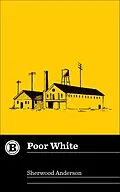
Published one year after Winesburg, Ohio, Sherwood Anderson's greatest novel offers a bleak portrait of luck and modernization in middle America. Part of Belt's Revivals Series and with a new introduction by John Lingan, author of Homeplace.
After a childhood living in poverty, Hugh McVey moves from Missouri to the agrarian town of Bidwell, Ohio, hoping to become an inventor. There, he develops a mechanical cabbage planter to ease the burden of famers, but an investor in town exploits his product and it eventually fails. His next invention, a corn cutter, makes him a millionaire and transforms Bidwell into a center of manufacturing. McVey, perennially lonely and ruminative, eventually meets Clara Butterworth, who attends college at nearby Ohio State and is perennially harassed by her potential suitors. But McVey is plagued by the search for love in a new America overrun by lifeless machines. Published in 1920, Poor White has a modernist sensibility and a realist attention to everyday life but also an eerily contemporary resonance.
A perfect distillation of how industrialization changed small-town America, Poor White is a little-known classic of American literature from the author H. L. Mencken dubbed "America's Most Distinctive Novelist.”