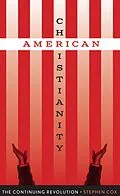
This wide-ranging study examines the ever-evolving forms of Christianity in the US, and why this constant reinvention is a vital part of American faith.
Christianity takes an astonishing variety of forms in America: from traditional chapels to modern megachurches, from evangelical fellowships to social-action groups, and from Pentecostal faith to apocalyptic movements. Stephen Cox argues that radical and unpredictable change is one of the few dependable features of Christianity in America. It is in a necessary and ongoing state of revolution and has been throughout our history.
Cox explores how both Catholic and Protestant churches have evolved in ways that would make them seem alien to their past adherents. He traces the rise of uniquely American movements, from the Mormons to the Seventh-day Adventists and Jehovah's Witnesses, and brings to life the vivid personalities-Aimee Semple McPherson, Billy Sunday, and many others-who have taken the gospel to the masses.
Cox also sheds new light on such issues as American Christians' constantly changing political involvements, their controversial revisions in the style and substance of worship, and their chronic expectation that God is about to intervene conclusively in human life. Asserting that "a church that doesn't promise new beginnings can never prosper in America," Cox demonstrates that American Christianity must be seen not as a sociological phenomenon but as the ever-changing story of individual seekers.
Autorentext
Stephen Cox is Professor of Literature and Director of the Humanities Program at the University of California, San Diego. He is the author of many books, including The New Testament and Literature and The Big House: Image and Reality of the American Prison.
Klappentext
Christianity takes an astonishing variety of forms in America, from churches that cherish traditional modes of worship to evangelical churches and fellowships, Pentecostal churches, social-action churches, megachurches, and apocalyptic churches-congregations ministering to believers of diverse ethnicities, social classes, and sexual orientations. Nor is this diversity a recent phenomenon, despite many Americans' nostalgia for an undeviating "faith of our fathers" in the days of yore. Rather, as Stephen Cox argues in this thought-provoking book, American Christianity is a revolution that is always happening, and always needs to happen. The old-time religion always has to be made new, and that is what Americans have been doing throughout their history. American Christianity is an engaging book, wide ranging and well informed, in touch with the living reality of America's diverse traditions and with the surprising ways in which they have developed. Radical and unpredictable change, Cox argues, is one of the few dependable features of Christianity in America. He explores how both the Catholic Church and the mainline Protestant churches have evolved in ways that would make them seem alien to their adherents in past centuries. He traces the rise of uniquely American movements, from the Mormons to the Seventh-day Adventists and Jehovah's Witnesses, and brings to life the vivid personalities-Aimee Semple McPherson, Billy Sunday, and many others-who have taken the gospel to the masses. He sheds new light on such issues as American Christians' intense but constantly changing political involvements, their controversial revisions in the style and substance of worship, and their chronic expectation that God is about to intervene conclusively in human life. Asserting that "a church that doesn't promise new beginnings can never prosper in America," Cox demonstrates that American Christianity must be seen not as a sociological phenomenon but as the ever-changing story of individual people seeking their own connections with God, constantly reinventing their religion, making it more volatile, more colorful, and more fascinating.