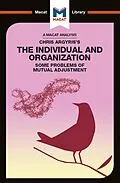
A critical analysis of Argyris's Integrating The Individual and the Organization, which forms part of a series of essays and books considering how organisations should be run. The essay explores the lack of congruence between the needs and expectations of individual employees and the organisations that employ them.
The impact of the work depends heavily on reasoning skills. Chris Argyris used strong, well-structured arguments to make his point. His reasoning has strong implications for solving a problem that many organizations experience: disengaged and disloyal employees. Grounding his argument in studies on human nature, Argyris highlighted that demands of greater independence, an expansion of interests, and re-orientation of goals usually accompany maturation, which is at odds with higher control stemming from formal organisations. This frustration, he contends, is detrimental to productivity, increases the chance of failure and causes conflict.
Autorentext
Dr Stoyan Stoyanov holds a PhD in management from the University of Edinburgh. He is currently a lecturer at the Hunter Centre for Entrepreneurship at the University of Strathclyde, Glasgow.
Klappentext
A critical analysis of Argyris's Integrating The Individual and the Organization, which forms part of a series of essays and books considering how organisations should be run. The essay explores the lack of congruence between the needs and expectations of individual employees and the organisations that employ them.
The impact of the work depends heavily on reasoning skills. Chris Argyris used strong, well-structured arguments to make his point. His reasoning has strong implications for solving a problem that many organizations experience: disengaged and disloyal employees. Grounding his argument in studies on human nature, Argyris highlighted that demands of greater independence, an expansion of interests, and re-orientation of goals usually accompany maturation, which is at odds with higher control stemming from formal organisations. This frustration, he contends, is detrimental to productivity, increases the chance of failure and causes conflict.
Zusammenfassung
A critical analysis of Argyris's Integrating The Individual and the Organization, which forms part of a series of essays and books considering how organisations should be run. The essay explores the lack of congruence between the needs and expectations of individual employees and the organisations that employ them. The impact of the work depends heavily on reasoning skills. Chris Argyris used strong, well-structured arguments to make his point. His reasoning has strong implications for solving a problem that many organizations experience: disengaged and disloyal employees. Grounding his argument in studies on human nature, Argyris highlighted that demands of greater independence, an expansion of interests, and re-orientation of goals usually accompany maturation, which is at odds with higher control stemming from formal organisations. This frustration, he contends, is detrimental to productivity, increases the chance of failure and causes conflict.
Inhalt
Ways In to the Text
Who was Chris Argyris?
What does Integrating The Individual and the Organization Say?
Why does Integrating The Individual and the Organization Matter?
Section 1: Influences
Module 1: The Author and the Historical Context
Module 2: Academic Context
Module 3: The Problem
Module 4: The Author's Contribution
Section 2: Ideas
Module 5: Main Ideas
Module 6: Secondary Ideas
Module 7: Achievement
Module 8: Place in the Author's Work
Section 3: Impact
Module 9: The First Responses
Module 10: The Evolving Debate
Module 11: Impact and Influence Today
Module 12: Where Next?
Glossary of Terms
People Mentioned in the Text
Works Cited