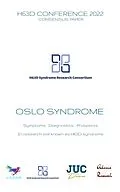
Oslo Syndrome (in research still known as H63D Syndrome) is a worldwide health problem in the field of iron metabolism disorders. After scientists from all over the world joined together in 2019 to form the H63D Syndrome Consortium, the consensus paper "H63D Syndrome" was adopted at a meeting in Oslo in December 2019. On the occasion of the 2022 conference the syndrome was renamed Oslo Syndrome for clinical settings. It is available in bookshops for a symbolic price. Also free of charge directly from the consortium.
Autorentext
Sven Sørensen:Biologist and physician from Oslo (Norway), researching H63D since 2011.Thomas Berg:Biologist from Edinburgh and Munich (UK and Germany), researching H63D since 2010.Marianne Kaufmann:Retired physician from Bavaria, researching the syndrome since 2000.Anastasios Papadopoulos:Retired physician from the U.S., researching the syndrome since 2003.Riku Honda:Biologist from Japan, researching the syndrome since 2007.Moshgan Mohammadi:Physician from Iran, researching the syndrome since 1995 - at a time when nobody thought of it being related to NTBI overload.Boris Dimitrov:Russian biologist, born 1970 in Sankt Petersburg, working for a private research lab.John M. Smith:Seasoned physician who recognized H63D syndrome as early as 1980, back then not knowing what he was confronted with.
Klappentext
H63D Syndrome is a worldwide health problem in the field of hemochromatosis caused by NTBI. After scientists from all over the world joined together in 2019 to form the H63D Syndrome Consortium, the consensus paper "H63D Syndrome" was adopted at a meeting in Oslo in December 2019. It is available in bookshops for a symbolic price. Also free of charge directly from the consortium.