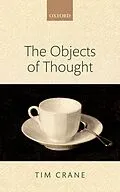
The Objects of Thought addresses the ancient question of how it is possible to think about what does not exist. Tim Crane argues that the representation of the non-existent is a pervasive feature of our thought about the world, and that we will not adequately understand thought's representational power ('intentionality') unless we have understood the representation of the non-existent. Intentionality is conceived by Crane in terms of the direction of the mind upon an object of thought, or an intentional object. Intentional objects are what we think about. Some intentional objects exist and some do not. Non-existence poses a problem because there seem to be truths about non-existent intentional objects, but truths are answerable to reality, and reality contains only what exists. The proposed solution is to accept that there are some genuine truths about non-existent intentional objects, but to hold that they must be reductively explained in terms of truths about what does exist. The Objects of Thought offers both an original account of the nature of intentionality and a solution to the problem of thought about the non-existent.
Autorentext
Tim Crane is Knightbridge Professor of Philosophy at the University of Cambridge, and a Professorial Fellow of Peterhouse College. He is the author of Elements of Mind: An Introduction to the Philosophy of Mind (OUP, 2001), and co-editor (with Katalin Farkas) of Metaphysics: A Guide and Anthology (OUP, 2004). He is the philosophy editor of the Times Literary Supplement, and the general editor of the Routledge Encylopedia of Philosophy. Crane is also a member (by election) of the Academia Europaea, on the editorial board of Mind and Language, and a member of the Analysis committee.
Zusammenfassung
The Objects of Thought addresses the ancient question of how it is possible to think about what does not exist. Tim Crane argues that the representation of the non-existent is a pervasive feature of our thought about the world, and that we will not adequately understand thought's representational power ('intentionality') unless we have understood the representation of the non-existent. Intentionality is conceived by Crane in terms of the direction of themind upon an object of thought, or an intentional object. Intentional objects are what we think about. Some intentional objects exist and some do not. Non-existence poses a problem because there seem to be truths about non-existent intentional objects, but truths are answerable to reality, and reality containsonly what exists. The proposed solution is to accept that there are some genuine truths about non-existent intentional objects, but to hold that they must be reductively explained in terms of truths about what does exist. The Objects of Thought offers both an original account of the nature of intentionality and a solution to the problem of thought about the non-existent.
Inhalt
- PART I: OBJECTS
- 1: The problem of nonexistence
- 2: Existence and quantification
- 3: The nature of existence and non-existence
- PART II: THOUGHT
- 4: The structure of intentionality
- 5: Reductionism and psychologism
- 6: Thinking about specific things
- Concluding remarks
- Bibliography
- Index